


Cisco 400-007 - CCDE written exam
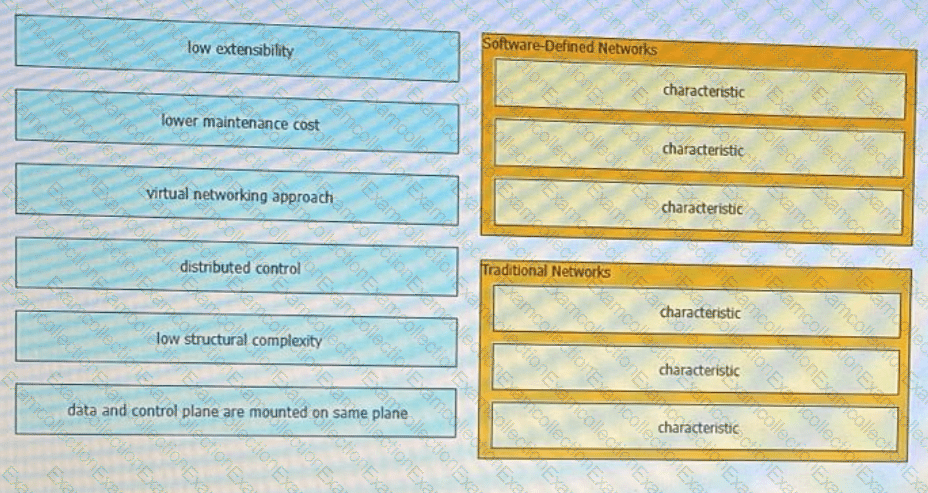
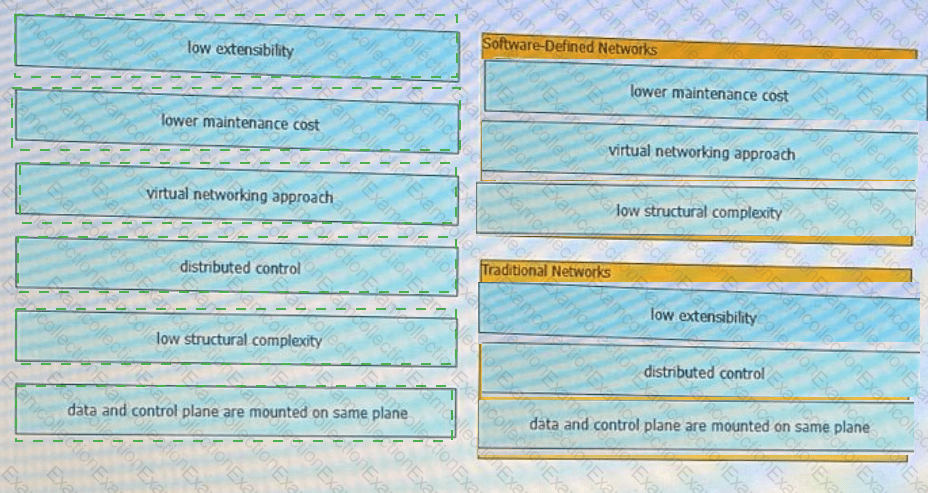
Software-defined network and traditional networks might appear the same to the end-user, but behind the scenes, each has unique sets of characteristics. Drag and drop these characteristic found on the left to the corresponding category on the right in no particular order?
Which two characteristics apply to firewall transparent mode operations in a firewall solution design? (Choose two.)
: 494 DRAG DROP
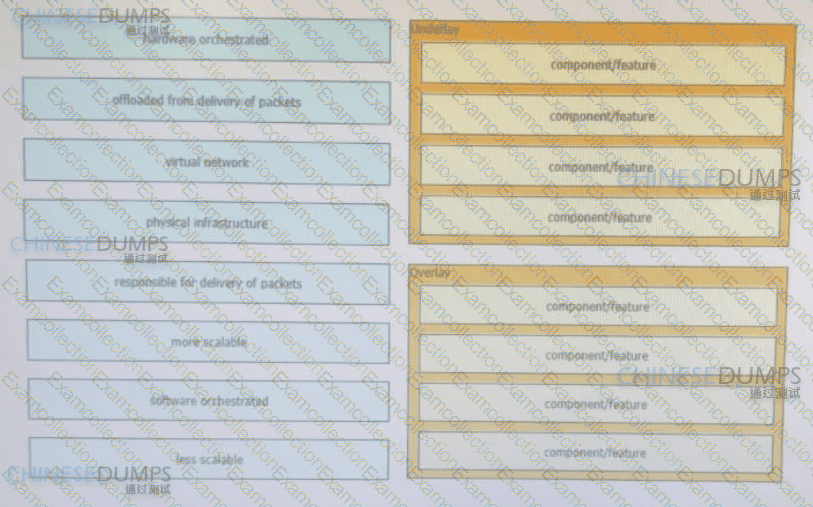
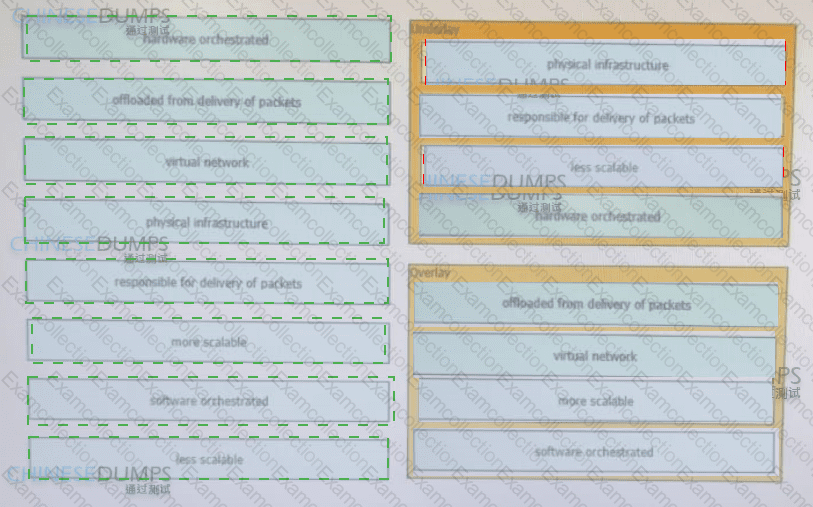
The customer ' s network manager asked for some key points to use m a presentation on overlay/underlay features and responsibilities. Drag and drop the features or responsibilities from the left onto the corresponding groups on the right in no particular order.
Company XYZ is designing the network for IPv6 security and they have these design requirements:
A switch or router must deny access to traffic from sources with addresses that are correct but topologically incorrect.
Devices must block Neighbor Discovery Protocol resolution for destination addresses not found in the binding table.
Which two IPv4 security features are recommended for this company? (Choose two)
The network designer needs to use GLOP IP addresses in order to make them unique within their ASN. Which multicast address range should be used?
Which solution component helps to achieve comprehensive threat protection and compliance for migration to multicloud SDX architectures?
A network architect is working on the baseline policies dealing with the use of Infrastructure-as-Code within an IT department, and has been requested to present the plan at the monthly management board meeting. What are two examples of operational aspects of Infrastructure-as-Code that can be highlighted during the presentation? (Choose two.)
You were tasked to enhance the security of a network with these characteristics:
A pool of servers is accessed by numerous data centers and remote sites
The servers are accessed via a cluster of firewalls
The firewalls are configured properly and are not dropping traffic
The firewalls occasionally cause asymmetric routing of traffic within the server data center.
Which technology should you recommend to enhance security by limiting traffic that could originate from a hacker compromising a workstation and redirecting flows at the servers?
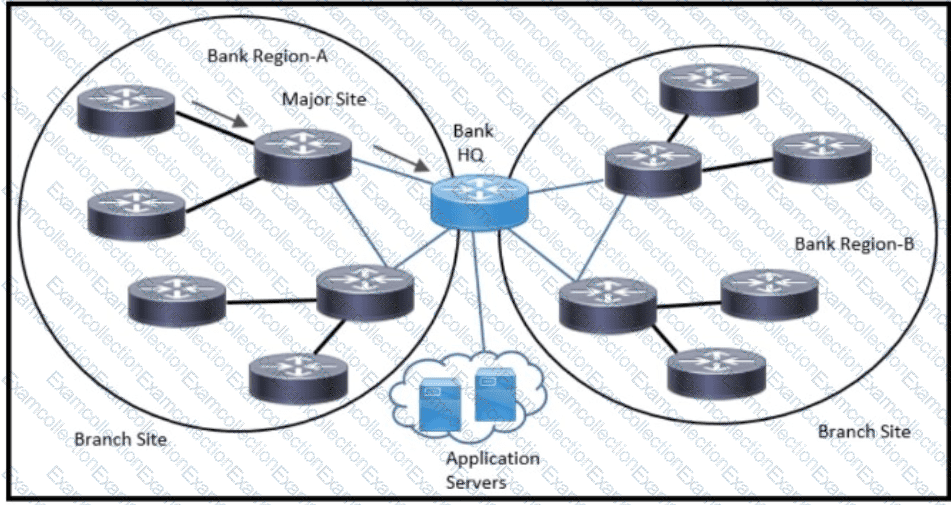
Refer to the exhibit. An architect has been tasked to design an ISIS solution for a medium-size financial customer. The resulting design must meet these requirements:
•Traffic from the branches toward major sites is limited to 500 Mbps.
•Traffic from the major sites toward HQ is limited to 1Gbps.
•The number of branch sites will increase to 30 within the next three years.
•Link and node failures in a region must only have an impact within that region
Which two ISIS design aspects must be included? (Choose two.)
An enterprise plans to evolve from a traditional WAN network to a software-defined WAN network. The existing devices have limited capability when it comes to virtualization. As the migration is carried out, enterprise applications and services must not experience any traffic impact. Which implementation plan can be used to accommodate this during the migration phase?
