


Microsoft DP-900 - Microsoft Azure Data Fundamentals
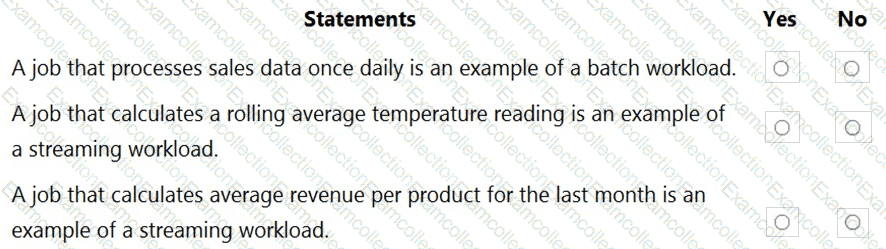
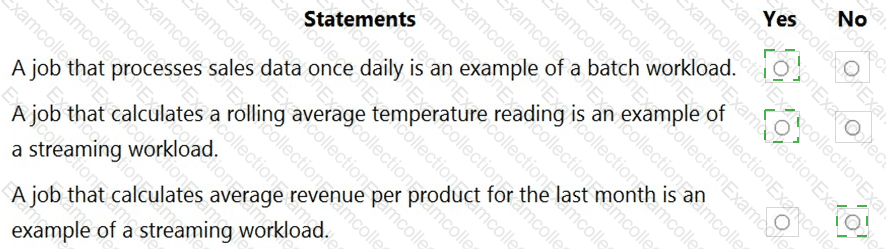
For each of the following statements, select Yes if the statement is true. Otherwise, select No.
NOTE: Each correct selection is worth one point.
Match the types of data to the appropriate Azure data services.
To answer, drag the appropriate data types from the column on the left to its service on the right. Each data type may be used once, more than once, or not at all.
NOTE: Each correct match is worth one point.



Your company needs to ensure that in Azure virtual machine can connect to Azure SQL databases without exposing the databases to the internet. What should you use?
You have a database that stores data in the format shown in the following table.

Of which type of database is this an example?
Select the answer that correctly completes the sentence.


Which Azure Storage service implements the key/value model?
Select the answer that correctly completes the sentence.

Select the answer that correctly completes the sentence.
What ate three characteristics of an Online Transaction Processing (OLTP) workload? Each correct answer presents a complete solution NOTE: Each correct selection is worth one point.
Which three actions are used when performing diagnostic analytics?
