


Fortinet NSE5_FWB_AD-8.0 - Fortinet NSE 5 - FortiWeb 8.0 Administrator
You are setting up a FortiWeb policy to protect a customer login portal. Users connect to https://login.training.lab, and you want FortiWeb to forward those requests to a load-balanced pool of back-end servers.
Which three components must you configure to complete the server policy?
You need to monitor and respond to repeated suspicious activity from individual users who are accessing your web application.
Your goal is to evaluate each action the user takes and apply a response when their behavior becomes risky.
What can you configure on FortiWeb to track user behavior and respond automatically when risky activity continues?
Refer to the exhibits.
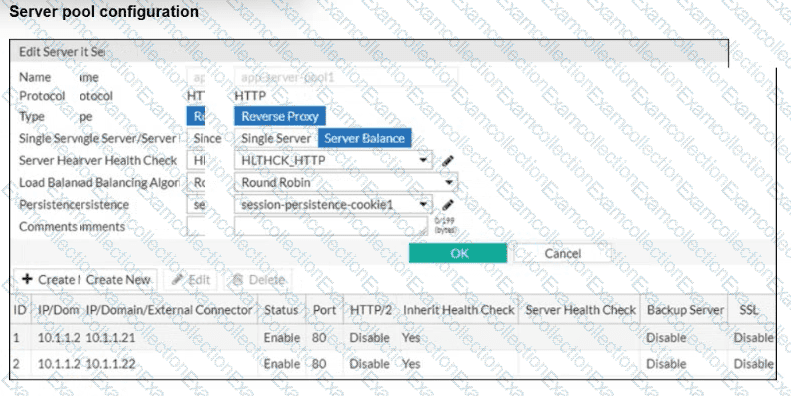
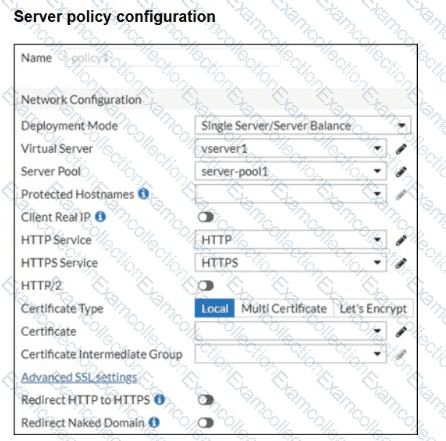
You are configuring a FortiWeb device in reverse proxy mode, placed downstream from a FortiGate. The server pool includes two back-end web servers: 10.1.1.21 and 10.1.1.22, and you’ve defined a health check policy.
After completing the server policy configuration and applying it to a virtual server, you notice that FortiWeb is not forwarding traffic to the back-end servers. No errors or health check failures appear in the logs.
Based on the configuration shown in the exhibit, which change should you make to restore back-end traffic flow?
You are reviewing a report from your FortiWeb logs and notice a JavaScript payload like < script > document.cookie < /script > is submitted through a product review form. The page doesn’t filter the script, and when users view the review, their session cookies are exposed.
Why is this attack dangerous?
A large enterprise has an existing web infrastructure with complex routing rules and static IP address assignments. The network administrators cannot modify the current IP address scheme, but they need FortiWeb to inspect and block threats like SQL injection and cross-site scripting (XSS) without changing the client-server communication flow.
In this situation, which FortiWeb operation mode is the most suitable?
A FortiWeb administrator sees the following request:
GET /api/v1/data HTTP/1.1
Host: example.com
Authorization: ApiKey abc123def456
The API key belongs to a user in group B who is authorized to access only /api/v1/reports.
What should the administrator do to prevent this unauthorized access?
A FortiWeb administrator is hardening a customer checkout website.
The site contains sensitive links such as Login, Payment, and Admin, which are embedded in the HTML content of several pages.
A vulnerability scan shows that automated bots can crawl the web pages and easily enumerate these links by parsing the HTML source, even though users access them normally, through the site navigation.
Which FortiWeb feature should the administrator enable to prevent automated scanners from discovering these links?
How should a FortiWeb administrator configure behavior-based bot detection to identify traffic from nonhuman users?
Refer to the exhibit.
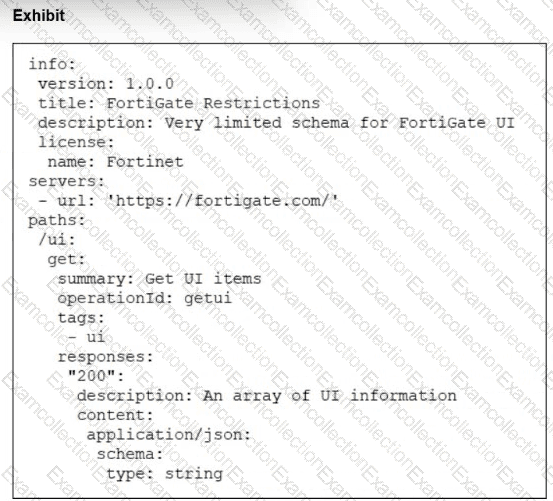
What does the exhibit show?
Refer to the exhibit.
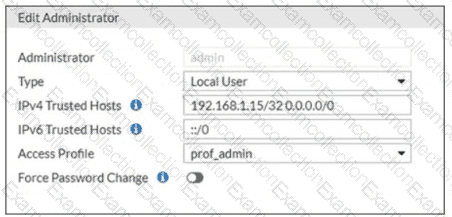
There is only one administrator account configured on FortiWeb and IPv6 is not configured on any interface.
Which action should an administrator take to restrict any brute force attacks that attempt to gain access to the FortiWeb management GUI?