


CSI AFP-Exam-1 - Applied Financial Planning Certification Exam 1 (AFP)
Daniel, age 55, plans to continue working for AMG Telecommunications Corporation until he retires at age 60. The company has a defined contribution plan and Daniel is looking for the best option that will allow him to receive the highest guaranteed income throughout his retirement. He is not concerned about leaving an estate and feels that interest rates will be at high levels as he nears retirement. What planning strategy should Daniel’s financial planner recommend he implement to achieve this objective?
Miles tells Rasheed, his financial planner, that he would like to assign the growth assets in his portfolio to his children. Rasheed recommends Miles freeze his estate. What is the primary risk associated with an estate freeze?
Todd, a financial planner, is meeting with Vanessa, a new client, to review her investment goals and objectives. During the meeting, Vanessa states that she believes the markets are very efficient and should reflect all available information in the price of securities. She is looking for an investment option that will reflect a similar level of risk and return characteristics as the Canadian market. What investment option should Todd recommend with Vanessa that would reflect her opinions?
Lois is reviewing her client Raj's retirement plan. To stay on track, Raj's TFSA (with a current balance of $10,000) will need to be worth $42,000 in five years. Raj is able to contribute his annual bonus of $5,000 at the end of each year. For Raj to stay on plan, what rate of return does Lois need to be targeting?
Carla, a financial planner, is meeting with a long-standing client, Jonathan. Jonathan informs Carla that he is upset and disappointed with the negative returns experienced with his investment portfolio. After acknowledging Jonathan's concerns, what should Carla's first step be in addressing his complaint?
What information is least important for Harry as a financial planner in his assessment for insurance coverage for his client with respect to estate planning purposes?
Huxley is meeting with his financial planner to review his retirement goals. He has saved $250,000 in an RRSP, currently contributes $10,000 per year, and his portfolio is expected to continue to earn an average of 5% per year. Huxley is hoping to retire in 18 years with $1 million saved in his RRSP. What strategy should Huxley's financial planner recommend to ensure he is on track?
At the first meeting, a financial planner explains her services, compensation, responsibilities, limitations, confidentiality practices, and what information the client must provide. Which document should normally capture these matters?
Janet's non-registered account holds the funds listed in the following table:
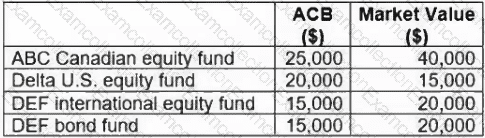
Assuming a marginal tax rate of 45%, what amount of tax payable will Janet incur if she redeems the account to fund the purchase of a new business?
How should Jenny, a financial planner, explain the benefits of a fee for service method of compensation to a prospective client?
