

Microsoft AZ-700 - Designing and Implementing Microsoft Azure Networking Solutions
What should you implement to meet the virtual network requirements for the virtual machines that connect to Vnet4 and Vnet5?
You need to configure the default route in Vnet2 and Vnet3. The solution must meet the virtual networking requirements.
What should you use to configure the default route?
You need to provide connectivity to storage1. The solution must meet the PaaS networking requirements and the business requirements.
What should you include in the solution?
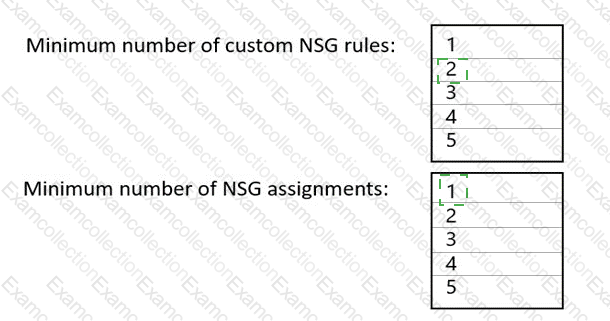
You need to restrict traffic from VMScaleSet1 to VMScaleSet2. The solution mus t meet the virtual networking requirements.
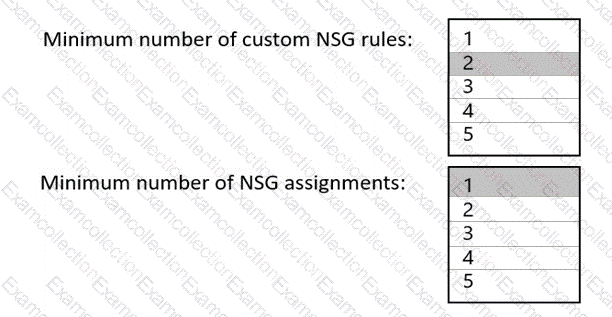
What is the minimum number of custom NSG rules and NSG assignments required? To answer, select the appropriate options in the answer area.
NOTE: Each correct selection is worth one point.
Ite rule for the 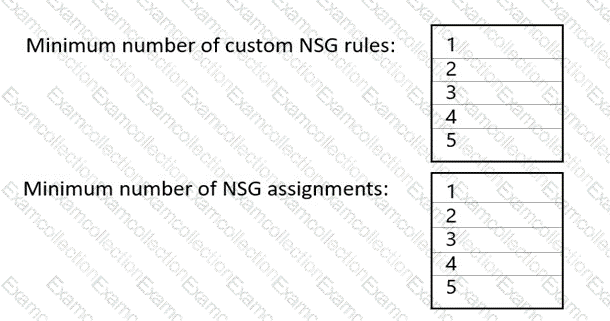
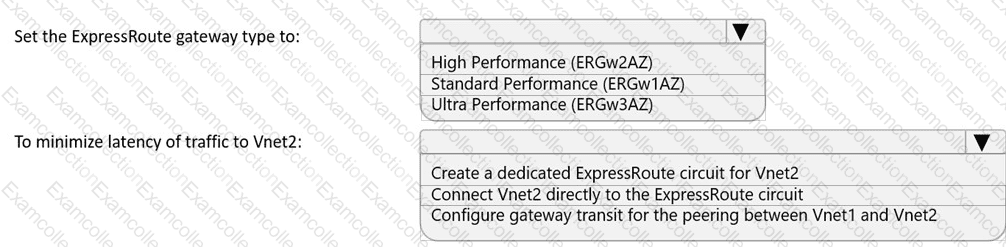
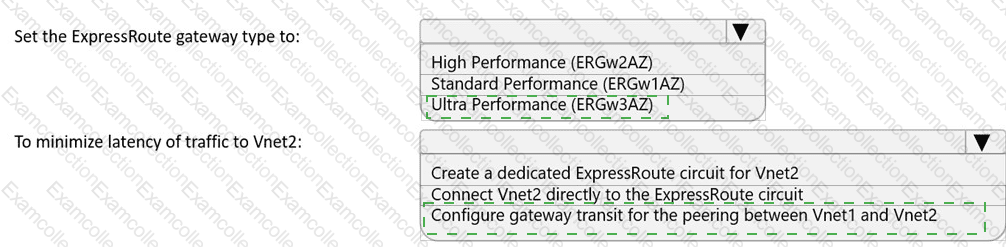
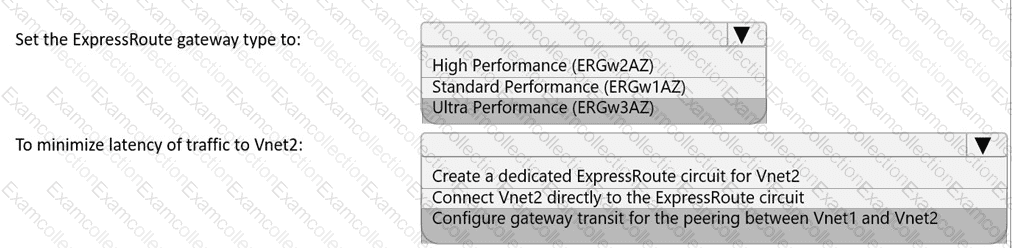
You need to recommend a configuration for the ExpressRoute connection from the Boston datacenter. The solution must meet the hybrid networking requirements and business requirements.
What should you recommend? To answer, select the appropriate options in the answer area.
NOTE: Each correct selection is worth one point.
You need to provide access to storage2. The solution must meet the PaaS networking requirements and the business requirements.
Which connectivity method should you use?
You need to connect Vnet2 and Vnet3. The solution must meet the virtual networking requirements and the business requirements.
Which two actions should you include in the solution? Each correct answer presents part of the solution.
NOTE: Each correct selection is worth one point.
You need to implement a P2S VPN for the users in the branch office. The solution must meet the hybrid networking requirements.
What should you do? To answer, select the appropriate options in the answer area.
NOTE: Each correct selection is worth one point.


You need to configure the default route on Vnet2 and Vnet3. The solution must meet the virtual networking requirements.
What should you use to configure the default route?
You have an Azure subscription that is linked to a Microsoft Entra tenant.
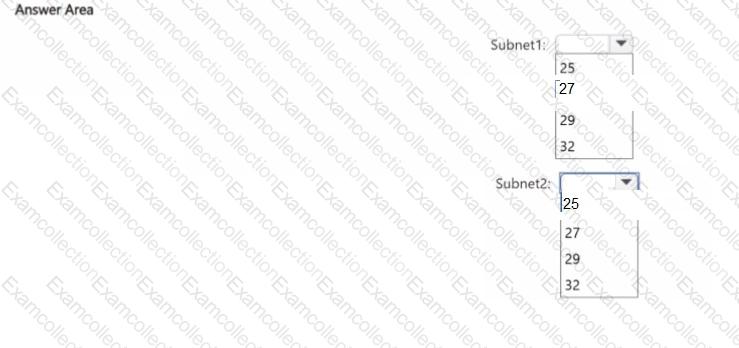
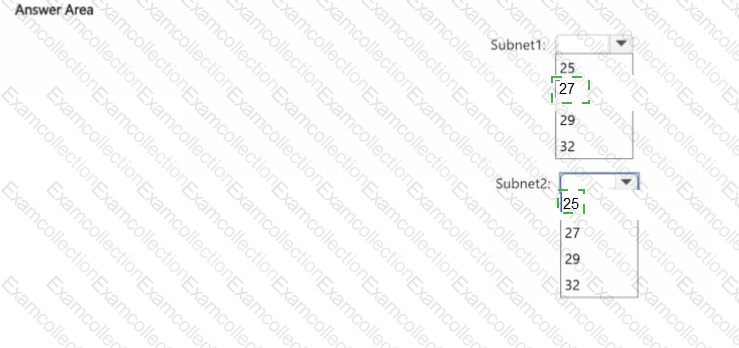
The subscription contains a virtual network named VNet1, a storage account named storage1, an Azure App Service web app named Appl. and an Azure SQL database named DB1. VNet1 contains two subnets named Subnet1 and Subnet2. Subnet 1 and Subnet2 each has a subnet mask of 255.255.255.224.
You plan to perform the following actions:
• On Subnet1. configure a service endpoint to connect to storage1 and a service endpoint to connect to the Microsoft Entra tenant.
• On Subnet2. configure a private endpoint to connect to App1 and a private endpoint to connect to DB1
How many IP addresses will be available on each subnet once the planned actions are complete? To answer, select the appropriate options in the answer area.
NOTE: Each correct answer is worth one point.