


Microsoft AZ-801 - Configuring Windows Server Hybrid Advanced Services
You are evaluating the technical requirements tor Cluster2.
What is the minimum number of Azure Site Recovery Providers that you should install?
You need to meet technical requirements for Share1.
What should you use?
You have two servers named Server1 and Server2 that run Windows Server. Both servers have the Hyper-V server role installed.
Server1 hosts three virtual machines named VM1, VM2, and VM3. The virtual machines replicate to Server2.
Server1 experiences a hardware failure.
You need to bring VM1, VM2, and VM3 back online as soon as possible.
From the Hyper-V Manager console on Server2, what should you run for each virtual machine?
Your on-premises network contains an Active Directory Domain Services (AD OS) domain.
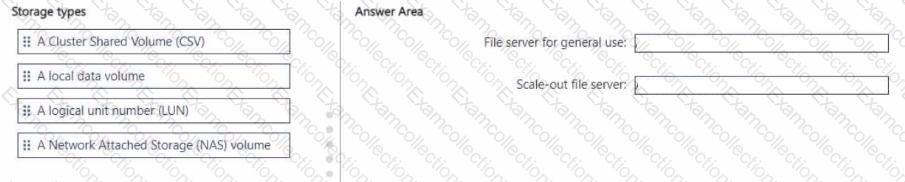
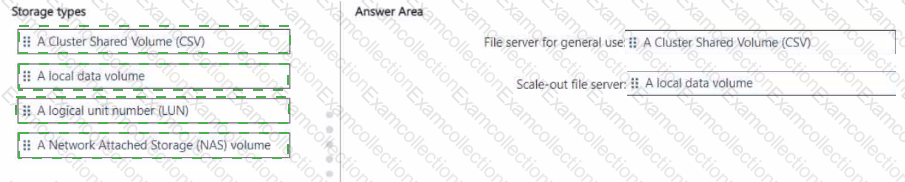
You plan to implement a failover cluster to enable a highly available file server. You are evaluating the following clustered file servers:
• File server for general use
• Scale-out file server
Which type of storage should you use for each file server? To answer, drag the appropriate storage types to the correct file servers. Each storage type may be used once, more than once, or not at all. You may need to drag the split bar between panes or scroll to view content.
NOTE: Each correct selection is worth one point.
You have a Microsoft Sentinel deployment and 100 Azure Arc-enabled on-premises servers. All the Azure Arc-enabled resources are in the same resource group.
You need to onboard the servers to Microsoft Sentinel. The solution must minimize administrative effort.
What should you use to onboard the servers to Microsoft Sentinel?
You have two Azure virtual networks named Vnet1 and Vnet2.
You have a Windows 10 device named Client1 that connects to Vnet1 by using a Point-to-Site (P2S) IKEv2 VPN.
You implement virtual network peering between Vnet1 and Vnet2. Vnet1 allows gateway transit Vnet2 can use the remote gateway.
You discover that Client1 cannot communicate with Vnet2.
You need to ensure that Client1 can communicate with Vnet2.
Solution: You enable BGP on the gateway of Vnet1.
Does this meet the goal?
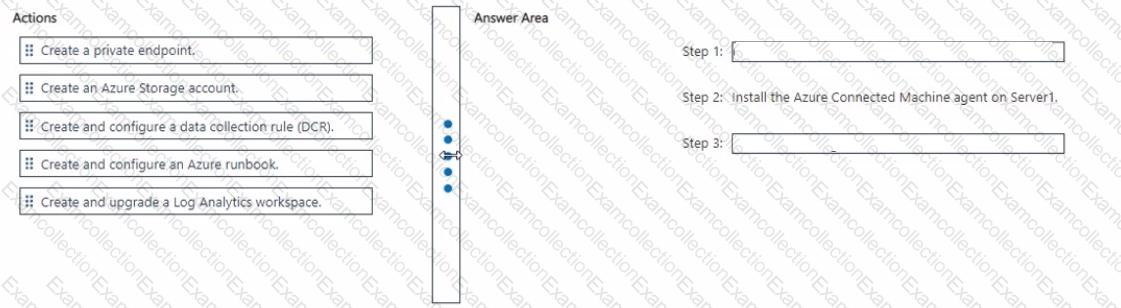
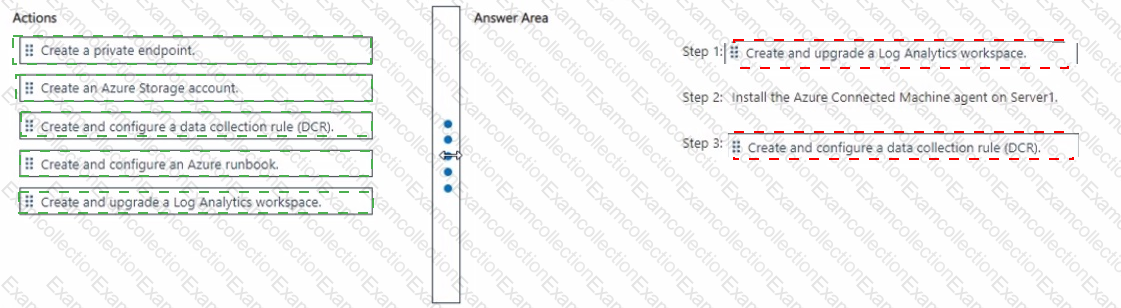
You have an on-premises server named Server1 that runs Windows Server.
You have an Azure subscription that uses Microsoft Defender for Cloud.
You need to onboard Server1 to Defender for Cloud.
Which actions should you perform in sequence? To answer, drag the appropriate actions to the correct order. Each action may be used once, more than once, or not at all. You may need to drag the split bar between panes or scroll to view content.
NOTE: Each correct selection is worth one point.
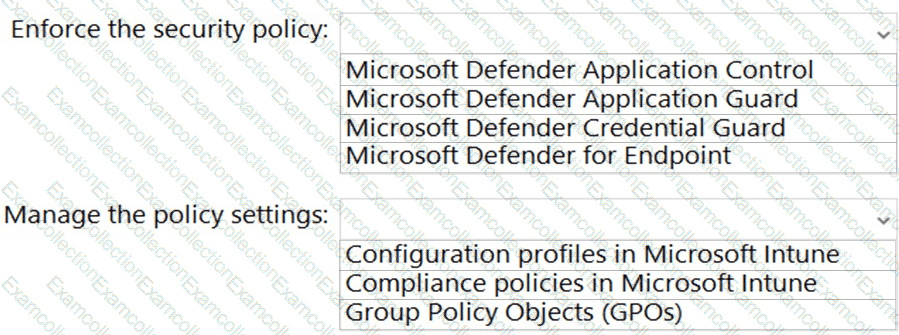
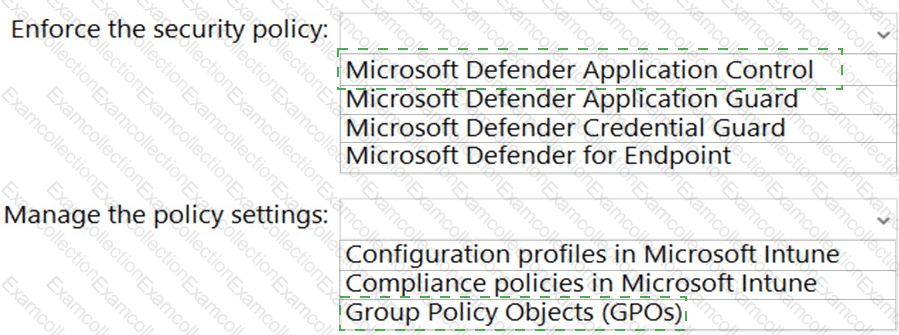
You need to implement a security policy solution to authorize the applications. The solution must meet the security requirements.
Which service should you use to enforce the security policy, and what should you use to manage the policy settings? To answer, select the appropriate options in the answer area.
NOTE: Each correct selection is worth one point.
You are remediating the firewall security risks to meet the security requirements.
What should you configure to reduce the risks?