

Spring Sale Special Limited Time 70% Discount Offer - Ends in 0d 00h 00m 00s - Coupon code: xmas50

CIMA BA2 - Fundamentals of management accounting

Page: 12 / 12
Total 392 questions

In the context of short term decision making, what is a notional cost?

A.

A cost which cannot be forecast with any degree of certainty

B.

A cost which cannot be measured in financial terms

C.

A cost which reflects the use of resources when no actual cost is incurred

D.

A cost which is already committed and cannot be avoided

Which of the following are not examples of intangible and nonfinancial factors in decision making? (Select ALL that apply.)

A.

Profitability ratios

B.

Market share

C.

Return on investment

D.

Employee morale

E.

Competitor reaction

F.

Government regulations

Which of the following is the correct definition is an annuity:

A.

A chain of regular cash flows up to a certain period of time.

B.

A series of cash outflows which goes on forever.

C.

A set of regular payments of increasing value.

Which of the following statements about CIMA's role in relation to its students is correct?

i. CIMA's professional conduct staff process complaints made against CIMA students

ii. Students are not governed by CIMA's code of ethics until they become registered CIMA members

iii. Students may consult CIMA about situations in their work place that appear to conflict with CIMA's code of ethics

iv. Once students have passed all of the CIMA exams they may use the designatory letters ACMA

A.

(i), (ii) and (iv)

B.

(i), (iii) and (iv)

C.

(i) and (iii)

D.

(iii) and (iv)

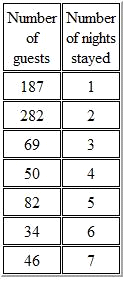
Refer to the exhibit.

The following records are available for a hotel for last week.

The sales revenue in the hotel coffee shop last week was $16,750.

The sales revenue per guest night was (to the nearest $0.01):

Give your answer to 2 decimal places.

In investment appraisal, the net present value (NPV) is

A.

The discount rate at which the project's cash inflows are equal to the cash outflows.

B.

The present value of the project's cash inflow.

C.

The difference between the present value of the project's cash inflows and the present value of the cash outflows.

D.

The difference between the present value of the project's profit and the present value of the initial investment.