


Anthropic CCAR-P - Claude Certified Architect - Professional
A pilot AI assistant for procurement specialists shows 89 percent first-response acceptance, but follow-up surveys reveal that specialists frequently override the assistant’s vendor recommendations after considering criteria the assistant did not evaluate. The pilot owner wants to ship the assistant unchanged because of the strong acceptance rate.
Which two Discernment-competency observations should you raise BEFORE approving the launch? (Select two.)
You are integrating Claude Code into the team’s pull-request workflow. The team wants AI-assisted review without removing human approval.
Which integration design best fits this requirement?
You are classifying token-management tactics by where each tactic applies in the request lifecycle: “Input Preparation,†“Prompt Construction,†or “Output Handling.â€
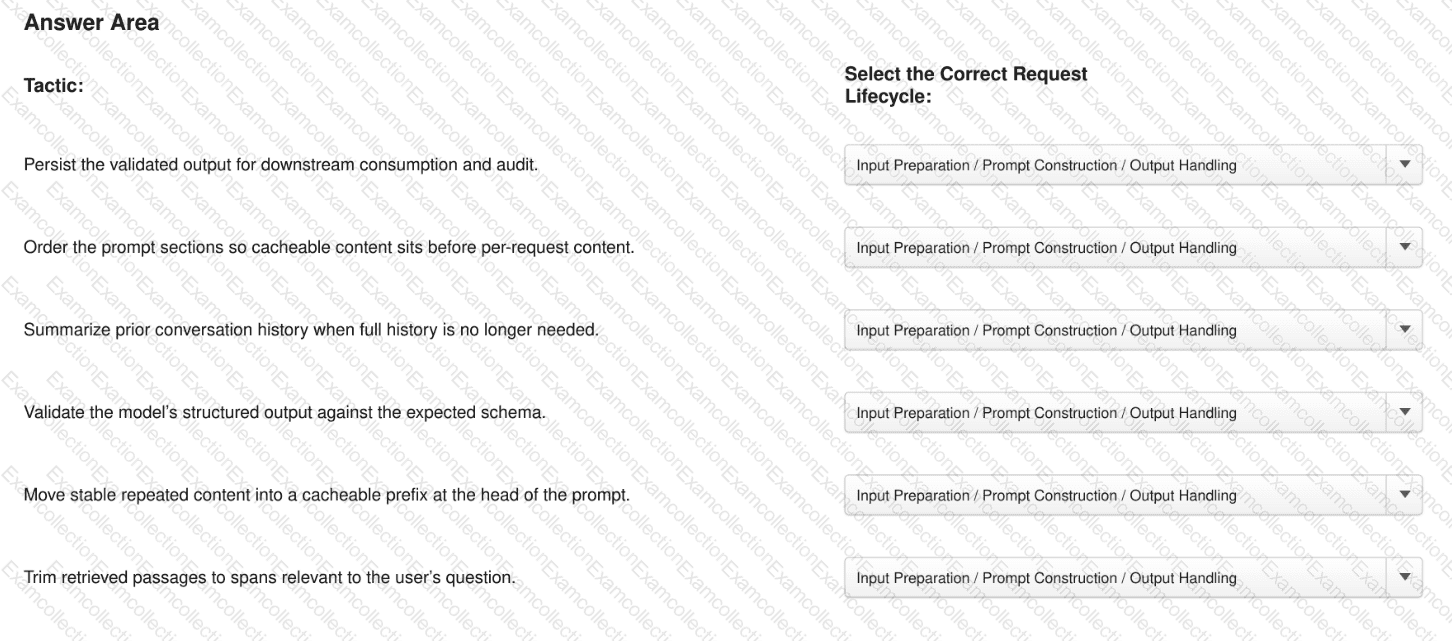
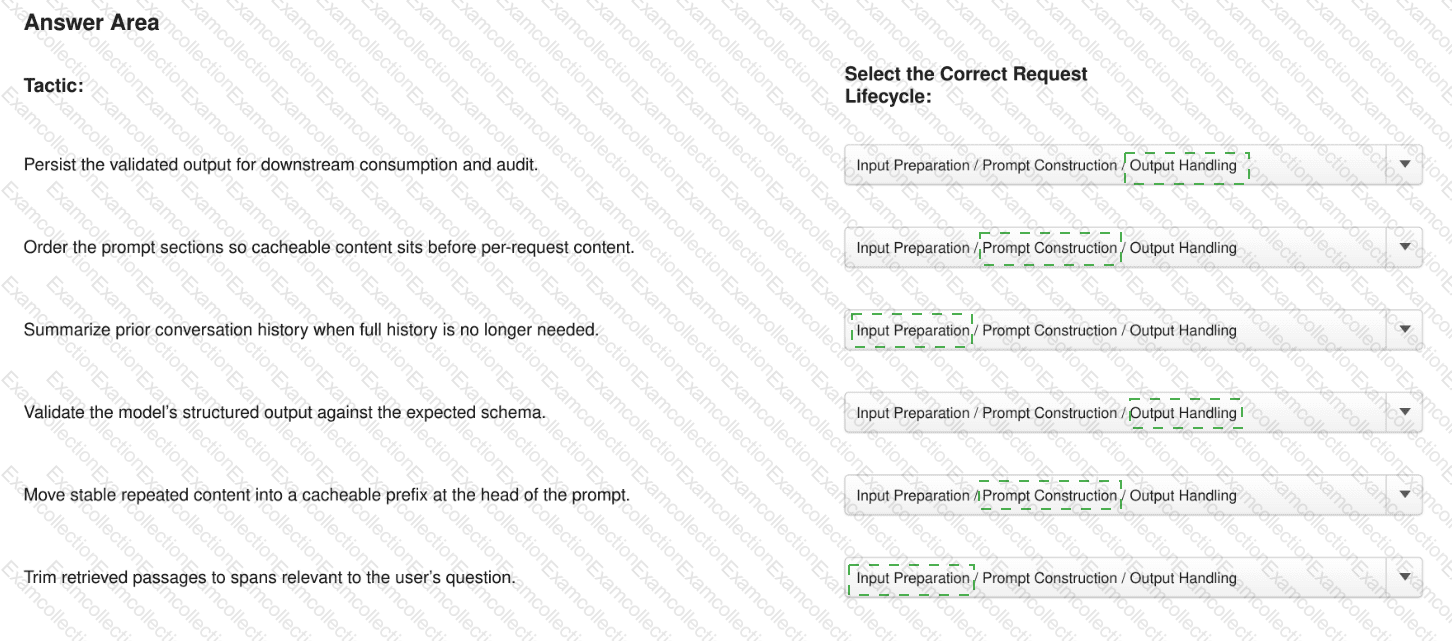
You are designing a content moderation classifier that processes high volumes of user-generated comments under a tight per-message latency budget using well-defined classification labels.
Which model selection best aligns with the workload?
You are identifying signals that a deployment should re-enter design rather than continue iterating in place.
Which signal most directly indicates the need for a new design cycle?
A security team is evaluating two proposed controls. Control A adds an outbound tool allow-list with destination restrictions and per-call review. Control B scores responses against a stable adversarial evaluation set after each model-version change.
Which two risk categories are correctly matched to these controls? (Select two.)
You are presenting an architectural decision to a mixed audience that includes an executive sponsor and the engineering leads who will implement the decision.
Which presentation strategy best serves both audiences?
You are integrating Claude Code into a workflow that runs against a production database.
Which guardrail design most directly preserves safety on data-modifying operations?