


Fortinet FCSS_EFW_AD-7.6 - Fortinet NSE 7 - Enterprise Firewall 7.6 Administrator
Refer to the exhibit, which shows the packet capture output of a three-way handshake between FortiGate and FortiManager Cloud.
What two conclusions can you draw from the exhibit? (Choose two.)
An administrator is checking an enterprise network and sees a suspicious packet with the MAC address e0:23:ff:fc:00:86.
What two conclusions can the administrator draw? (Choose two.)
In which two ways does FortiGate utilize the Internet Service Database (ISDB)?
Refer to the exhibit.
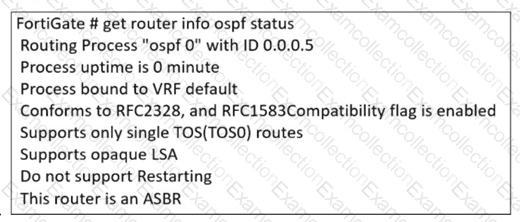
The partial output of an OSPF command is shown. You are checking the OSPF status of a FortiGate device when you receive the output shown in the exhibit. Based on the output, which two statements about FortiGate are correct? (Choose two answers)
An administrator applied a block-all IPS profile for client and server targets to secure the server, but the database team reported the application stopped working immediately after.
How can an administrator apply IPS in a way that ensures it does not disrupt existing applications in the network?
Why is the web filter database version not shown in the FortiGuard Security Services dashboard?
What action can be taken on a FortiGate to block traffic using IPS protocol decoders, focusing on network transmission patterns and application signatures?
Refer to the exhibits.
A policy package conflict status and information from the import device wizard in the Core1 VDOM are shown. When you import a policy package, the following message appears for the Web_restrictions web filter profile and the deep-inspection SSL-SSH profile: " The following objects were found having conflicts. Please confirm your settings, then continue. " The Web_restrictions and deep-inspection profiles are used by other FortiGate devices within FortiManager. Which step must you take to resolve the issue? (Choose one answer)
Refer to the exhibit, which shows the HA status of an active-passive cluster.
An administrator wants FortiGate_B to handle the Core2 VDOM traffic.
Which modification must the administrator apply to achieve this?
Refer to the exhibit, which shows an ADVPN network.
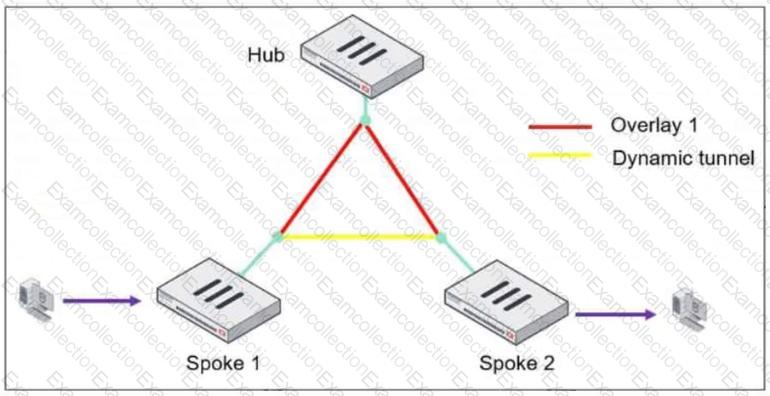
The client behind Spoke-1 generates traffic to the device located behind Spoke-2.
What is the first message that the hub sends to Spoke-1 to bring up the dynamic tunnel?