
Month End Sale Special Limited Time 70% Discount Offer - Ends in 0d 00h 00m 00s - Coupon code: xmas50

Fortinet NSE7_SSE_AD-25 - Fortinet NSE 7 - FortiSASE 25 Enterprise Administrator

Page: 2 / 3
Total 81 questions

Refer to the exhibit.

An organization must inspect all the endpoint internet traffic on FortiSASE, and exclude Google Maps traffic from the FortiSASE tunnel and redirect it to the endpoint physical interface.

Which configuration must you apply to achieve this requirement? (Choose one answer)

A.

Add the Google Maps URL in the zero trust network access (ZTNA) TCP access proxy forwarding rule.

B.

Configure a steering bypass tunnel firewall policy using Google Maps FQDN to exclude and redirect the traffic.

C.

Exempt Google Maps in URL filtering in the web filter profile.

D.

Add the Google Maps URL as a steering bypass destination in the endpoint profile.

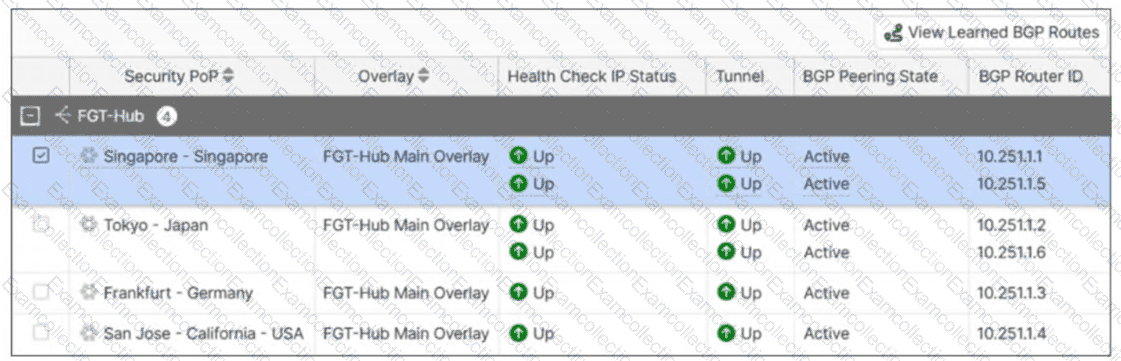
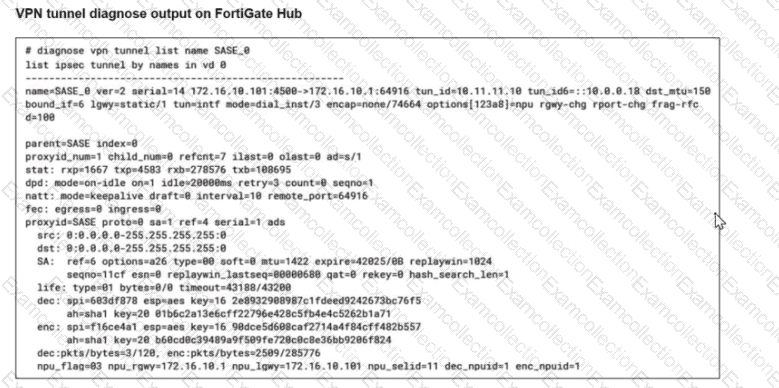
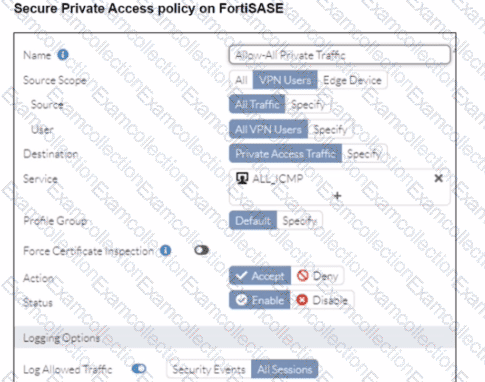
Refer to the exhibit.

An SPA service connection is experiencing connectivity problems. Which configuration setting should the administrator verify and correct first? (Choose one answer)

A.

Remote Gateway

B.

BGP Peer IP

C.

Network overlay ID

D.

Authentication Method

What can be configured on FortiSASE as an additional layer of security for FortiClient registration? (Choose one answer)

A.

Security posture tags

B.

User verification

C.

Device identification1

D.

Application inventory

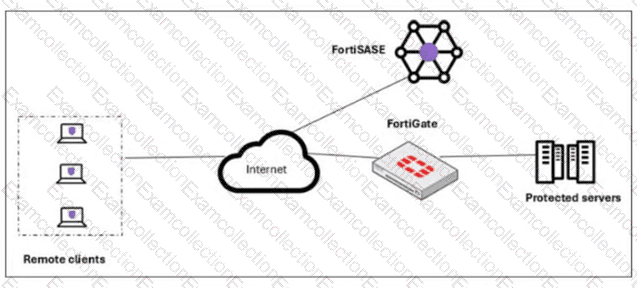
Refer to the exhibit.

A company has a requirement to inspect all the endpoint internet traffic on FortiSASE, and exclude Google Maps traffic from the FortiSASE VPN tunnel and redirect it to the endpoint physical Interface.

Which configuration must you apply to achieve this requirement?

A.

Exempt the Google Maps FQDN from the endpoint system proxy settings.

B.

Configure a static route with the Google Maps FQDN on the endpoint to redirect traffic

C.

Configure the Google Maps FQDN as a split tunneling destination on the FortiSASE endpoint profile.

D.

Change the default DNS server configuration on FortiSASE to use the endpoint system DNS.

A FortiSASE administrator is configuring a Secure Private Access (SPA) solution to share endpoint information with a corporate FortiGate.

Which three configuration actions will achieve this solution? (Choose three.)

A.

Add the FortiGate IP address in the secure private access configuration on FortiSASE.

B.

Use the FortiClient EMS cloud connector on the corporate FortiGate to connect to FortiSASE

C.

Register FortiGate and FortiSASE under the same FortiCloud account.

D.

Authorize the corporate FortiGate on FortiSASE as a ZTNA access proxy.

E.

Apply the FortiSASE zero trust network access (ZTNA) license on the corporate FortiGate.

Refer to the exhibit.

Which two statements about the onboarding process shown in the exhibit are true? (Choose two answers)

A.

The user must manually select which FortiSASE components to install during the FortiClient setup.

B.

Depending on the installer used, the invitation code step may be skipped.

C.

The invitation code must always be entered manually after installing FortiClient.

D.

This is an email from the FortiSASE platform to an end user.

Refer to the exhibit.

Which type of information or actions are available to a FortiSASE administrator from the following output? (Choose one answer)

A.

Administrators can view and configure endpoint profiles and ZTNA tags.

B.

Administrators can view and configure automatic patching of endpoints, and first detected date for applications.

C.

Administrators can view latest application version available and push updates to managed endpoints.

D.

Administrators can view application details, such as vendor, version, and installation dates to identify unwanted or outdated software.

What are two advantages of using zero-trust tags? (Choose two.)

A.

Zero-trust tags can be used to allow or deny access to network resources

B.

Zero-trust tags can determine the security posture of an endpoint.

C.

Zero-trust tags can be used to create multiple endpoint profiles which can be applied to different endpoints

D.

Zero-trust tags can be used to allow secure web gateway (SWG) access

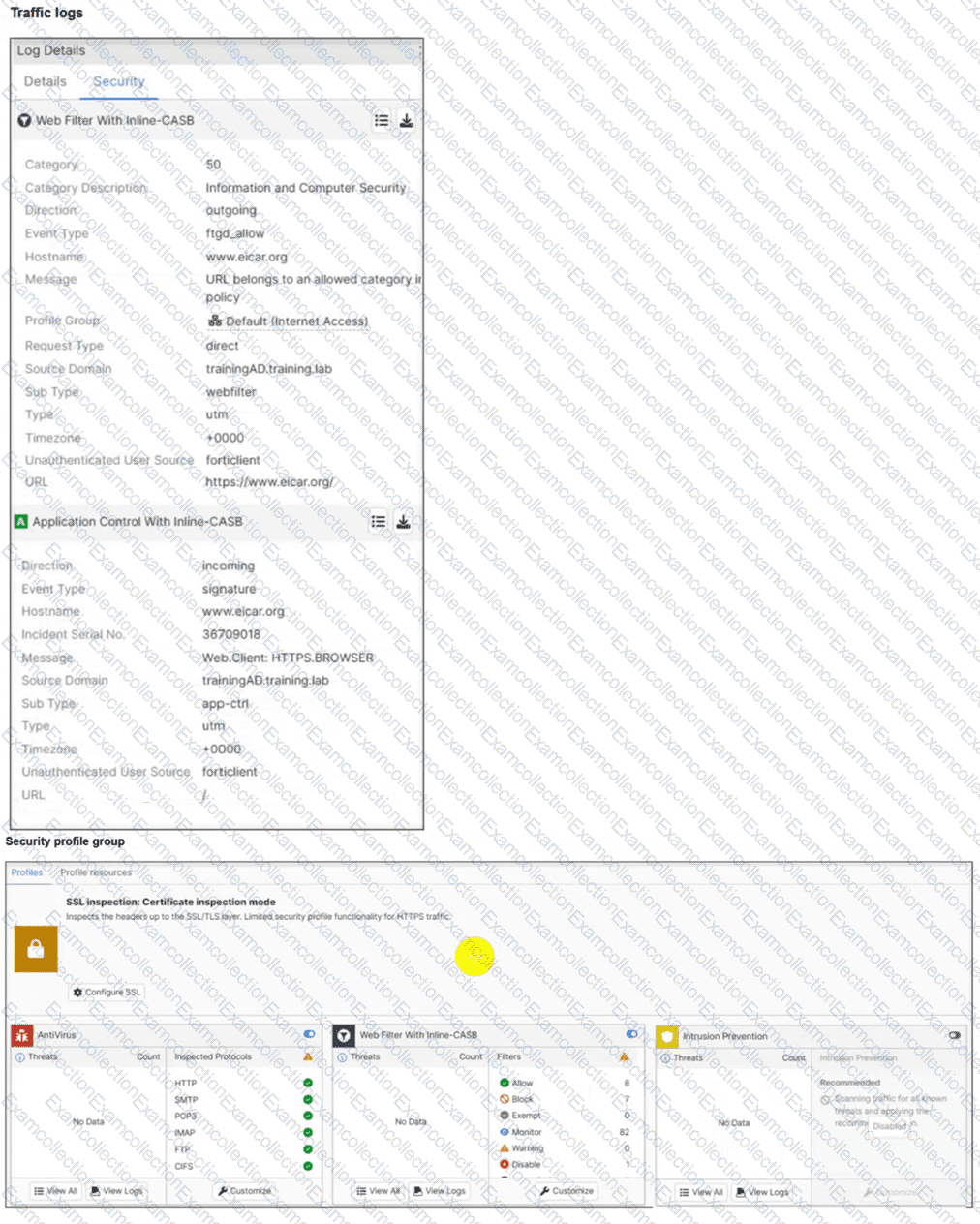
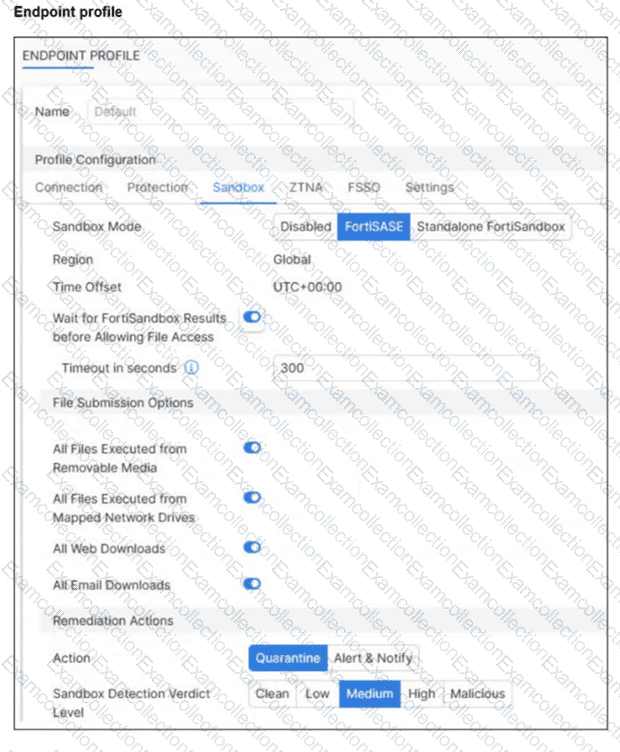
Refer to the exhibits.

How will the application vulnerabilities be patched, based on the exhibits provided? (Choose one answer)

A.

An administrator will patch the vulnerability remotely using FortiSASE.

B.

The end user will patch the vulnerabilities using the FortiClient software.

C.

The vulnerability will be patched by installing the patch from the vendor's website.

D.

The vulnerability will be patched automatically based on the endpoint profile configuration.

How does FortiSASE address the market trends of multicloud and Software-as-a-Service (SaaS) adoption, hybrid workforce, and zero trust? (Choose one answer)

A.

It focuses solely on securing on-premises networks, ignoring cloud and remote work challenges.

B.

It prioritizes legacy VPN connections for hybrid workforces, bypassing modern cloud and zero-trust security measures.

C.

It provides visibility and control for multicloud and SaaS environments, ensures secure and seamless access for hybrid workforces, and implements zero-trust principles.1

D.

It supports only zero-trust frameworks without addressing multicloud or hybrid workforce needs.