


Netskope NSK300 - Netskope Certified Cloud Security Architect Exam
A recent report states that users are using non-sanctioned Cloud Storage platforms to share data Your CISO asks you for a list of aggregated users, applications, and instance IDs to increase security posture
Which Netskope tool would be used to obtain this data?
Review the exhibit.
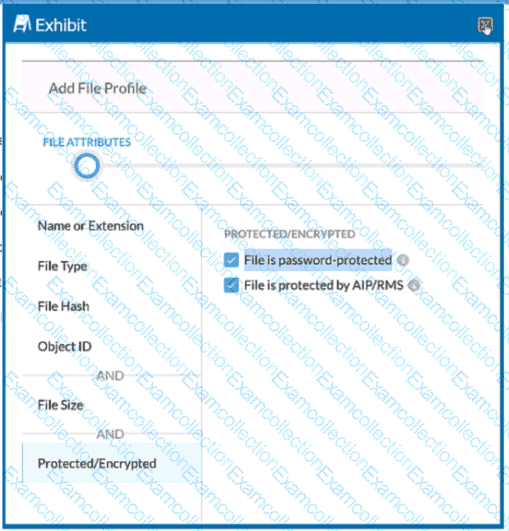
You are attempting to block uploads of password-protected files. You have created the file profile shown in the exhibit.
Where should you add this profile to use in a Real-time Protection policy?
You are implementing Netskope Cloud Exchange in your company lo include functionality provided by third-party partners. What would be a reason for using Netskope Cloud Risk Exchange in this scenario?
A hospital has a patient form that they share with their patients over Gmail. The blank form can be freely shared among anyone. However, if the form has any information filled out. the document is considered confidential.
Which rule type should be used in the DLP profile to match such a document?