


HRCI PHR - Professional in Human Resources
(Enter the answer as a numeric value.)
An employer onboards 150 employees. The new hire turnover rate is __________% if 30 individuals from this group are terminated within the first 90 days.
A primary benefit of an effective onboarding program is that it:
(Enter the answer as a numeric value.)
The annual yield ratio is 75%. If an organization interviews 16 candidates, it hires __________ of them.
A summary of an organization's testing results is presented. Each applicant who passes the test is hired.
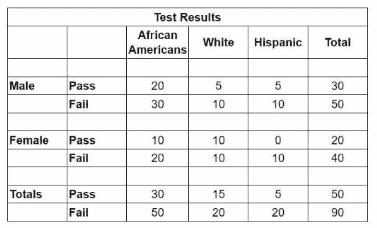
The table indicates adverse impact against:
An organization offers severance packages to a number of employees at the same location. One gender group receives more favorable benefits than the other. Which course of action is most appropriate?
What improvements occur when a manager hires primarily for cultural fit?
HR can best promote collaborative work environments by: (Select TWO options.)
A receptionist has a need for intermittent leave of absence. Which of the following staffing methods would be most cost-effective to fill the vacancy?
After receiving a large order, the shipping supervisor of a unionized manufacturing plant informs the crew that an overtime shift will be scheduled for the following Saturday. Three of the employees strongly object but do not provide acceptable excuses for not working the extra shift. On Saturday, none of the three employees report to work and the supervisor is forced to call out replacement employees from other departments. On the following Monday, as part of an investigation to determine if disciplinary action is called for, the supervisor instructs each of the employees to report alone to the office immediately after their shifts. The supervisor's intention is to question them about their failure to report for the overtime shift as required.
The employer’s policy provides a four-level, progressive disciplinary system. If disciplinary action is appropriate, the factor that has the most direct bearing on the level of discipline enforced is each employee’s:
What factors are keys to a successful reduction in force (RIF) process?
