


Microsoft PL-600 - Microsoft Power Platform Solution Architect
You are a Microsoft Power Platform architect.
You have identified several project risks.
You need to categorize potential risks that are specific to your customer.
How should you categorize the risks? To answer, drag the appropriate categories to the correct risks. Each category may be used once, more than once, or not at all. You may need to drag the split bar between panes or scroll to view content.
NOTE: Each correct selection is worth one point.


You are creating a scope of work document for a solution. You have the following requirements:
• Track support cases, first response time, and resolution time.
• Include a chat-like interface that allows managers to check the status of cases with minimal manual searching.
• Allow cases to have multiple different priority levels.
You need to include the required Dynamics 365 and Microsoft Power Platform components. Which two components should you include? Each correct answer presents part of the solution.
NOT: Each correct selection is worth one point.
You are designing the security model for a Power Platform solution.
The security model must meet the following requirements:
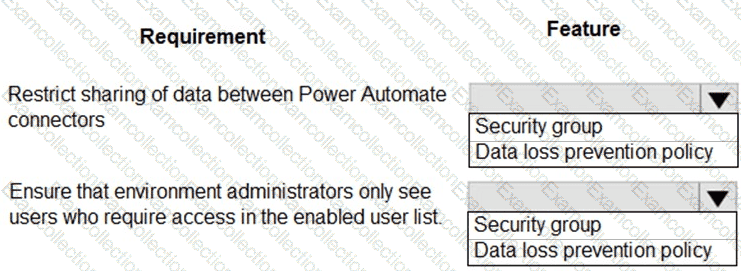
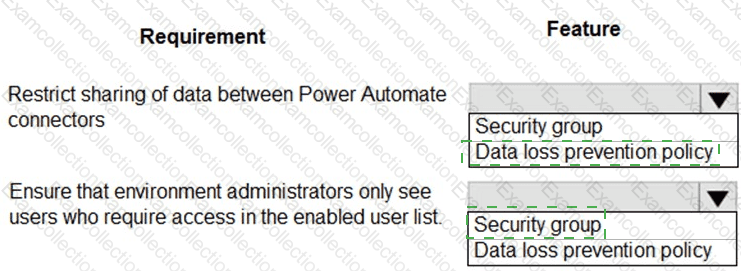
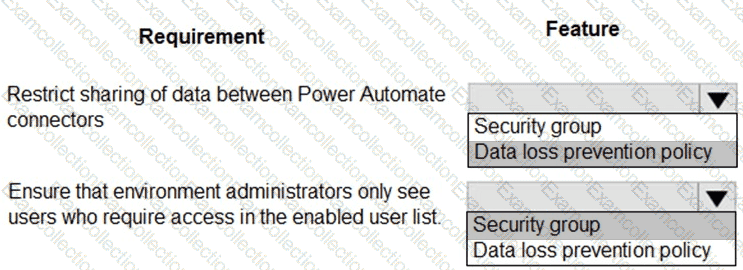
Restrict sharing of data between Power Automate connectors.
Ensure that environment administrators only see users who require access in the enabled user list.
You need to recommend security features for the solution.
What should you recommend? To answer, select the appropriate options in the answer area.
NOTE: Each correct selection is worth one point.
Note: This question is part of a series of questions that present the same scenario. Each question in the series contains a unique solution that might meet the stated goals. Some question sets might have more than one correct solution, while others might not have a correct solution.
After you answer a question in this section, you will NOT be able to return to it. As a result, these questions will not appear in the review screen.
A company plans to automate the expense approval process.
Users currently enter data into an on-premises SQL Server database.
You need to allow users to submit expenses from mobile devices.
Solution: Create a canvas app for expense data entry. Install the Power Automate app in Microsoft Teams. Create a cloud flow for approval to add data to the SQL Server database.
Does the solution meet the goal?
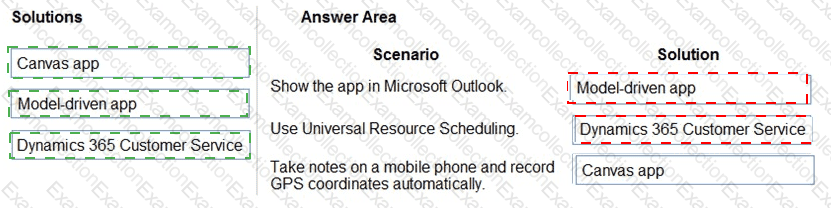
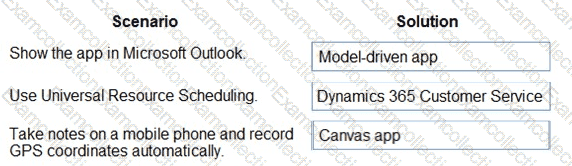
A new customer asks you to design a solution for a Power Apps app that uses Microsoft Dataverse.
The customer wants to keep the service process simple and save on both licensing and development time.
You need to recommend solutions for the customer.
What should you recommend? To answer, drag the appropriate setting to the correct drop targets. Each source may be used once, more than once, or not at all. You may need to drag the split bar between panes or scroll to view content.
NOTE: Each correct selection is worth one point.
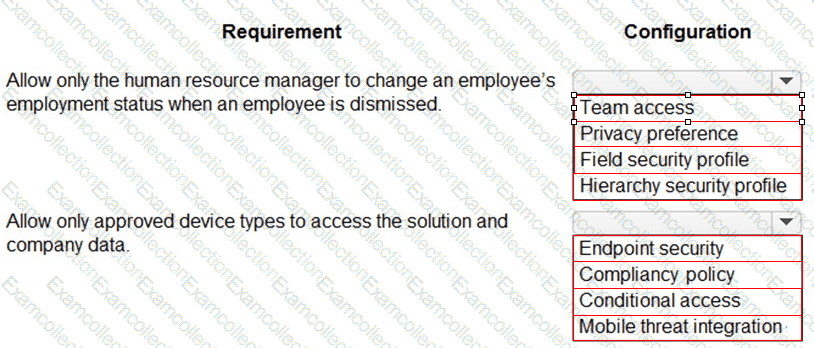
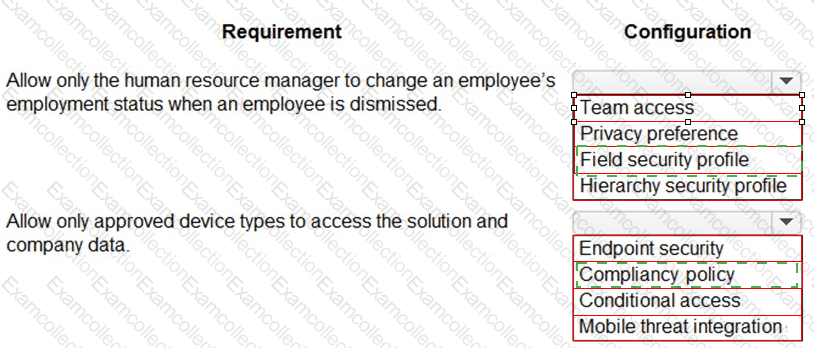
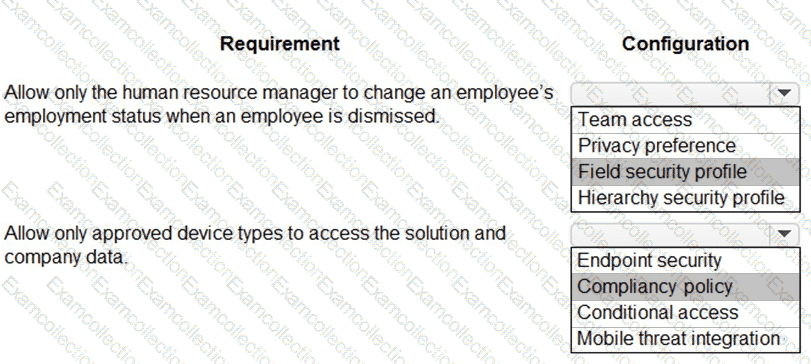
A company is creating a Power Platform solution to manage employees.
The company has the following requirements:
Allow only the human resource manager to change an employee’s employment status when an employee is dismissed.
Allow only approved device types to access the solution and company data.
You need to recommend a solution that meets the requirements.
What should you recommend? To answer, select the appropriate options in the answer area.
NOTE: Each correct selection is worth one point.
You are a Power Apps architect for a company. The IT administrator designs a Power Apps app that is ready to be tested. The company uses application lifecycle management (ALM).
Each version and solution component must be tracked as it is tested.
You need to recommend a strategy to deploy solutions for the user acceptance testing environment.
What should you recommend?
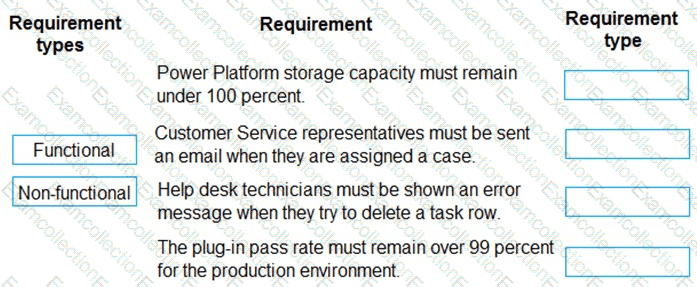
You are performing a requirements analysis for a customer.
The customer provides the following requirements:
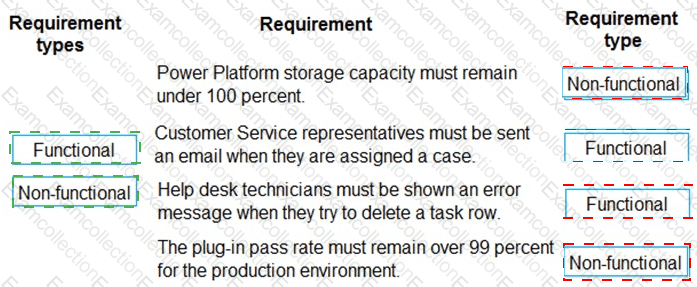
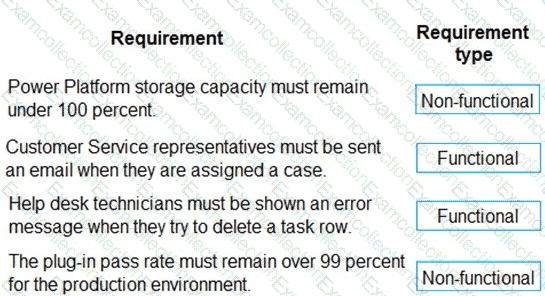
Power Platform storage capacity must remain under 100 percent.
Customer service representatives must be sent an email when they are assigned a case.
Help desk technicians must be shown an error message when they try to delete a task row.
The plug-in pass rate must remain over 99 percent for the production environment.
You need determine if the requirements are functional or non-functional.
Which requirement type should you use? To answer, drag the appropriate requirement types to the correct requirements. Each requirement type may be used once, more than once, or not at all. You may need to drag the split bar between panes or scroll to view content.
NOTE: Each correct selection is worth one point.
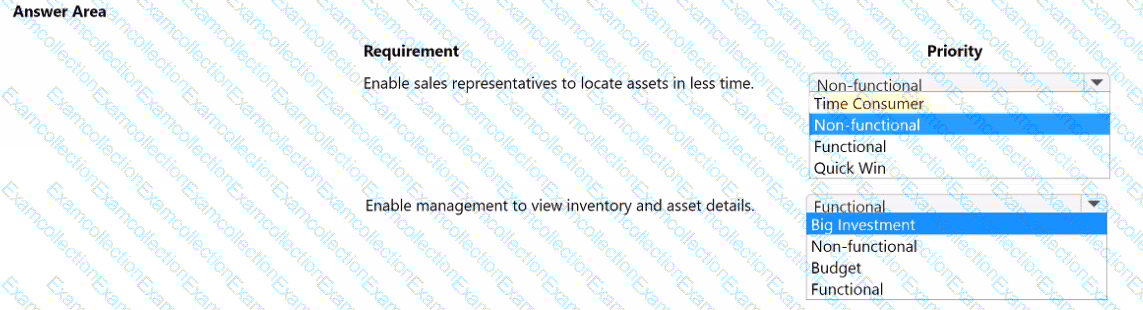
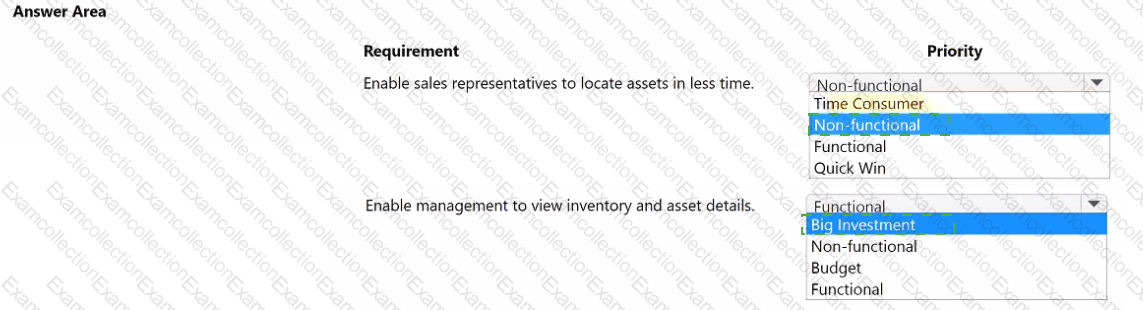
You are a Microsoft Power Platform architect gathering solution requirements for a customer. Management uses three different systems to locate asset inventory and contract details.
Management must view inventory with the ability to select assets and view additional details. Sales representatives have issues locating assets based on specific features in a timely manner when working with customers.
You need to prioritize the requirements.
Which priority should you use? To answer, select the appropriate options in the answer area.
NOTE: Each correct selection is worth one point.
You are a Power Apps architect for a company. The IT administrator designs a Power Apps app that is ready to be tested. The company uses application lifecycle management (ALM).
Each version and solution component must be tracked as it is tested.
You need to recommend a strategy to deploy solutions for the user acceptance testing environment.
What should you recommend?