


New Year Sale Special Limited Time 70% Discount Offer - Ends in 0d 00h 00m 00s - Coupon code: xmas50

ARDMS AE-Adult-Echocardiography - AE Adult Echocardiography Examination

Page: 1 / 5
Total 137 questions

What is the regional wall motion assessment of the two-chamber view displayed in this video?
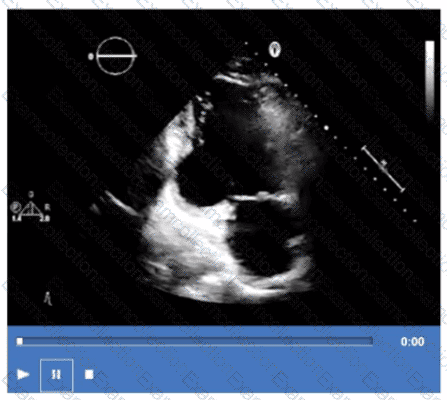
A.

Aneurysmal basal inferior wall

B.

Hypokinetic basal inferior wall

C.

Aneurysmal basal inferolateral wall

D.

Hypokinetic basal inferolateral wall

Which parameter is expected to increase in the presence of cardiac tamponade?

A.

Heart rate

B.

Oxygen saturation

C.

Systolic blood pressure

D.

Diastolic blood pressure

What is the direction of the mitral regurgitant jet in this video clip?
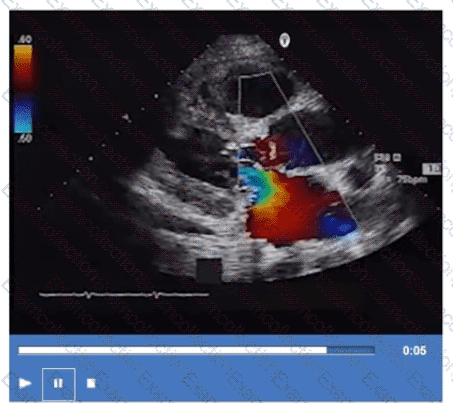
A.

Anterior

B.

Posterior

C.

Medial

D.

Lateral

The 'P' wave of an electrocardiogram relates to which echocardiography event?

A.

Atrial contraction

B.

Ventricular contraction

C.

Atrial relaxation

D.

Ventricular diastole

Which kind of cardiac valve is a heterograft?

A.

One that is from a human to another human

B.

One that is from pericardial tissue

C.

One that is from one location to another in the same human

D.

One that is from an animal to a human

Which is an abnormal response to a stress echocardiogram?

A.

Hyperdynamic wall motion

B.

Increased end-systolic volume

C.

Increased ejection fraction

D.

Decreased end-diastolic volume

Which is the most likely abnormality represented in these images from a 48-year-old man with shortness of breath?
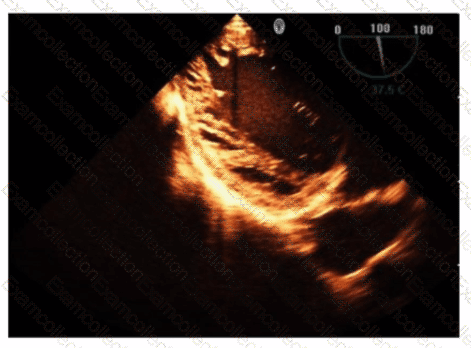
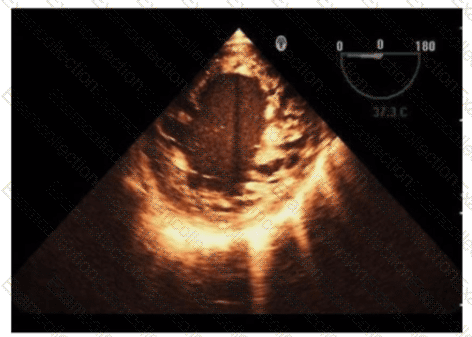
A.

Loeffler syndrome

B.

Hypertrophic cardiomyopathy

C.

Left ventricular noncompaction

D.

Ischemic cardiomyopathy

Which coronary artery territory is associated with the wall motion abnormality demonstrated in this video?
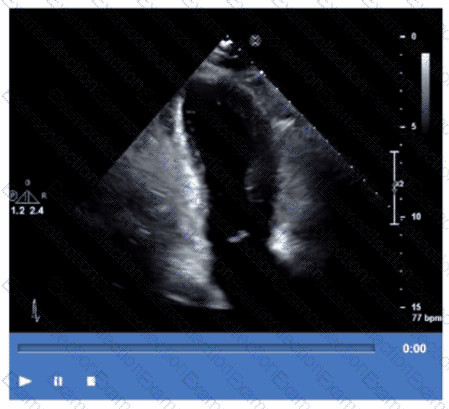
A.

Right

B.

Left circumflex

C.

Left anterior descending

D.

Posterior descending

During which phase of the cardiac cycle does mitral valve prolapse occur?

A.

Ventricular filling

B.

Atrial systole

C.

Diastasis

D.

Ventricular contraction

What does the Qp represent in an atrial septal defect shunt ratio measurement (Qp/Qs)?

A.

Right ventricular outflow tract (RVOT) time velocity integral

B.

Left ventricular outflow tract (LVOT) time velocity integral

C.

Stroke volume of the RVOT

D.

Stroke volume of the LVOT