


ASCP ASCP-MLT - MEDICAL LABORATORY TECHNICIAN - MLT(ASCP)
Deviations from Beer's Law are caused by:
In healthy individuals, procalcitonin is only synthesized by the thyroid C cells. In bacterial infections, PCT is synthesized in various extrathyroidal neuroendocrine tissues.
In healthy individuals, procalcitonin is synthesized by which cells in the body?
Bacterial contamination can manifest itself in several ways including: the presence of clots, darker purple-black color of blood unit, unit can appear cloudy, hemolysis may be present.
During routine inspection, a unit of unexpired blood was noticed to have a black color with numerous small clots. What is the likely cause for this observation?
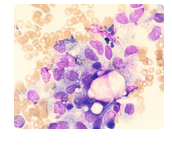
Identify the following cell types by matching them with their respective image.
"Universal donor", (a misnomer) is usually applied to group O, Rh negative blood. Although it may be necessary to use group O, Rh negative blood in an extreme emergency, it is preferable to use type specific blood for emergencies.
In an extreme emergency , if the ABO and Rh type are unknown which of the following should be given to the patient?
Root cause analysis (RCA) is a structured study that determines the underlying causes of adverse events. RCA focuses on systems, processes, and common causes that were involved in the adverse event. It then determines ways to prevent recurrence by identifying potential improvements in systems and processes that should decrease the likelihood of repeating the event.
Failure mode and effect analysis (FMEA) is used to evaluate a process prior to its implementation. Its purpose is to identify ways in which a process might possibly fail with the goal being to eliminate or reduce the likelihood of such a failure.
Monitoring quality indicators is important in the maintenance of quality health care. Quality indicators should be identified to prevent medical errors from occurring or to prevent the recurrence of a quality issue. However, it is not the method that is used to evaluate an adverse event after it has occurred.
A medical record audit may be a part of a root cause analysis.
A medical event occurs that results in serious injury to a patient. All systems, processes, and common causes that were involved in the adverse event should be evaluated. A method that can be implemented to effectively study the underlying causes is known as:
Standard precautions should be followed:
Anti-A, anti-P, anti-Leb, and anti-M all react best at 4o C as they are predominantly IgM antibodies. Other antibody group choices above include IgG antibodies such as anti-K, anti-s, anti-S, and anti-Fya, anti-Lub, etc. which react best at 37o C.
Which of the following groups of antibodies generally reacts most strongly at 4o C:
hs-CRP is a recent marker of chronic inflammation. New measurements of CRP in lower levels (hs-CRP) are now measured to monitor risk of cardiovascular disease.
Select the statement that best describes hs-CRP?
Granulocytes are the most granular population; they have the most side scatter of the cell populations that are listed.
Which of these white blood cell populations would have the MOST side scatter when analyzed using flow cytometry?
The part of the microscope that control the amount of light entering the specimen much like the iris of your eye controls light is called the iris _______________.
The role of provider-performed microscopy (PPM) is the
Troponin is a very specific biomarker that is released during cardiac injury or stress. CK is found not only in cardiac tissue, but also in muscle and brain tissue. LD levels can be elevated in cardiac events, tissue breakdown, and hemolysis. Myoglobin is elevated when muscle tissue is damaged and is not specific for the heart muscle.
Chemistry
Which one of the following is the MOST specific biochemical marker of myocardial infarction?
Nucleated RBCs may be seen in the peripheral blood in cases of beta thalassemia major. Nucleated RBCs are usually not found in peripheral blood in cases of beta thalassemia minor and beta thalassemia intermedia, and would not be a finding in beta thalassemia minima.
Nucleated RBCs are most likely to be seen in the peripheral blood of which of these beta thalassemias?
All of the following have been an inspection deficiency for CLIA-approved laboratories except:
