


CompTIA CS0-003 - CompTIA CyberSecurity Analyst CySA+ Certification Exam
A penetration tester is conducting a test on an organization ' s software development website. The penetration tester sends the following request to the web interface:
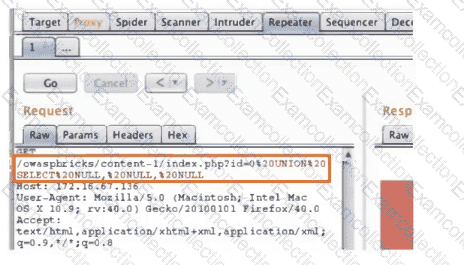
Which of the following exploits is most likely being attempted?
A company has a primary control in place to restrict access to a sensitive database. However, the company discovered an authentication vulnerability that could bypass this control. Which of the following is the best compensating control?
During a routine review, a security analyst identifies an unusual volume of traffic going to a local network workstation. The analyst extracts the traffic to a pcap file. To analyze the content, the analyst runs the command tcpdump -n -r file.pcap udp and port 53 and receives the following output:
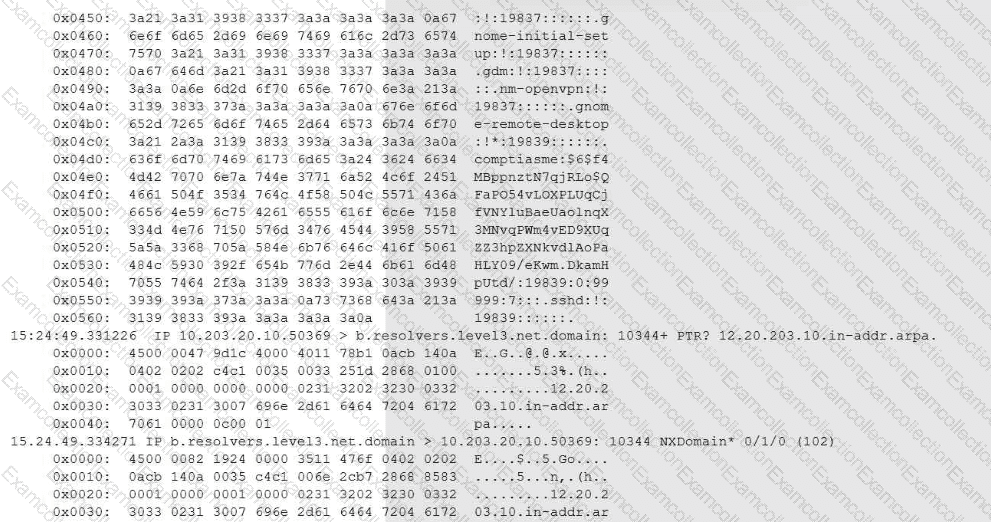
Which of the following conclusions will the analyst reach based on the pcap analysis?
An organization has experienced a breach of customer transactions. Under the terms of PCI DSS, which of the following groups should the organization report the breach to?
A security analyst found the following vulnerability on the company’s website:
< INPUT TYPE=“IMAGE†SRC=“javascript:alert(‘test’);†>
Which of the following should be implemented to prevent this type of attack in the future?
A team of analysts is developing a new internal system that correlates information from a variety of sources analyzes that information, and then triggers notifications according to company policy Which of the following technologies was deployed?
Which of the following best describes the document that defines the expectation to network customers that patching will only occur between 2:00 a.m. and 4:00 a.m.?
A recent zero-day vulnerability is being actively exploited, requires no user interaction or privilege escalation, and has a significant impact to confidentiality and integrity but not to availability. Which of the following CVE metrics would be most accurate for this zero-day threat?
A threat hunter seeks to identify new persistence mechanisms installed in an organization ' s environment. In collecting scheduled tasks from all enterprise workstations, the following host details are aggregated:
Which of the following actions should the hunter perform first based on the details above?
A security analyst needs to identify an asset that should be remediated based on the following information:
File ServerCVSS:3.1/AV:L/AC:L/PR:N/UI:N/S:U/C:L/I:L/A:H/
Web ServerCVSS:3.1/AV:N/AC:L/PR:N/UI:N/S:U/C:H/I:H/A:H/
Mail Server (corrected from “Mall serverâ€)CVSS:3.1/AV:N/AC:H/PR:N/UI:N/S:U/C:H/I:H/A:H/
Domain ControllerCVSS:3.1/AV:N/AC:L/PR:R/UI:R/S:U/C:H/I:H/A:H/
Which of the following assets should the analyst remediate first?
