

Microsoft DP-600 - Implementing Analytics Solutions Using Microsoft Fabric
You plan to implement a Fabric workspace that will save a curated dataset to Delta tables in OneLake. The dataset will contain only structured tables named by using enforced relationships.
The ingestion process must apply multi-table updates as a single unit of work. The developers at your company will use T-SQL for ingestion and transformations.
You need to recommend an analytical data store that supports read/write T-SQL operations and full multi-table transactional guarantees.
What should you recommend?
You have a Fabric workspace named Workspace1 that contains a warehouse named Warehouse1 and a lakehouse named Lakehouse1. Warehouse 1 contains a table named Table!. Lakehouse! contains a delta table named Table2.
You need to persist data from Table! to Table2. The solution must use a low-code interface. What should you do?
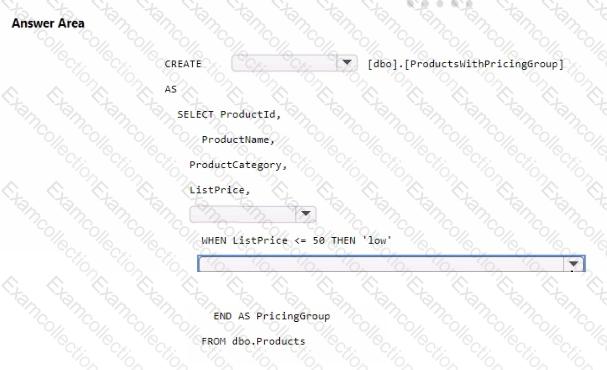
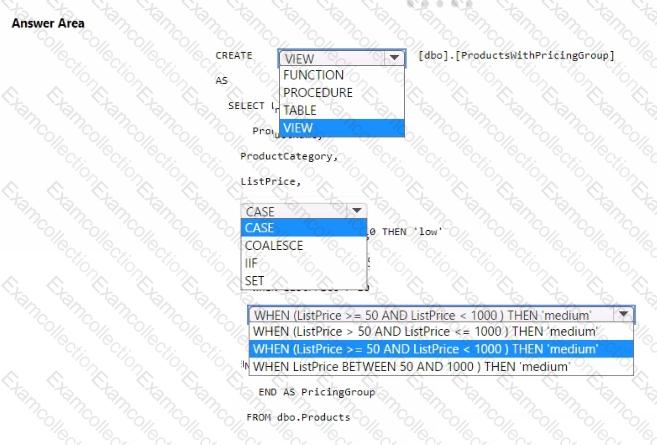
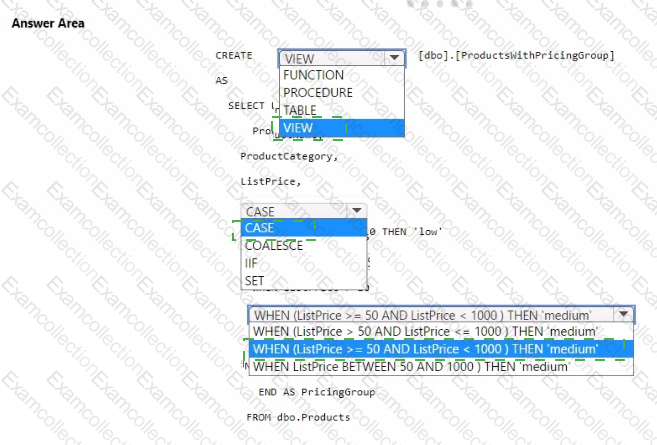
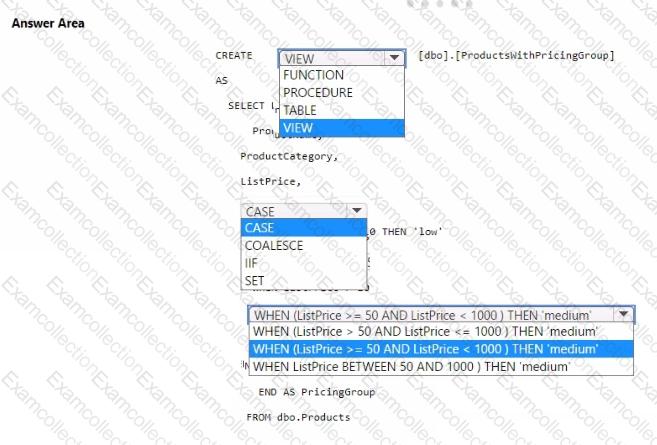
You need to resolve the issue with the pricing group classification.
How should you complete the T-SQL statement? To answer, select the appropriate options in the answer area.
NOTE: Each correct selection is worth one point.
You have a Fabric tenant that contains a new semantic model in OneLake.
You use a Fabric notebook to read the data into a Spark DataFrame.
You need to evaluate the data to calculate the min, max, mean, and standard deviation values for all the string and numeric columns.
Solution: You use the following PySpark expression:
df.explain()
Does this meet the goal?
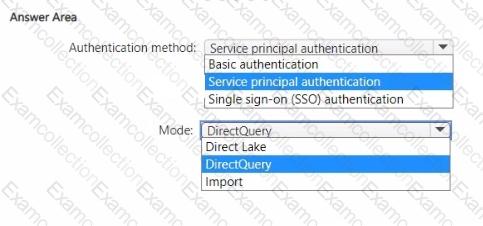
You need to design a semantic model for the customer satisfaction report.
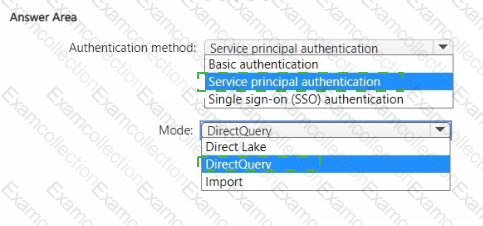
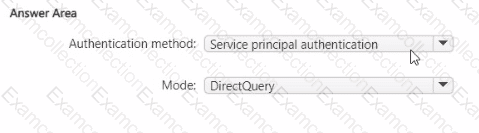
Which data source authentication method and mode should you use? To answer, select the appropriate options in the answer area.
NOTE: Each correct selection is worth one point.
You need to recommend a solution to prepare the tenant for the PoC.
Which two actions should you recommend performing from the Fabric Admin portal? Each correct answer presents part of the solution.
NOTE: Each correct answer is worth one point.
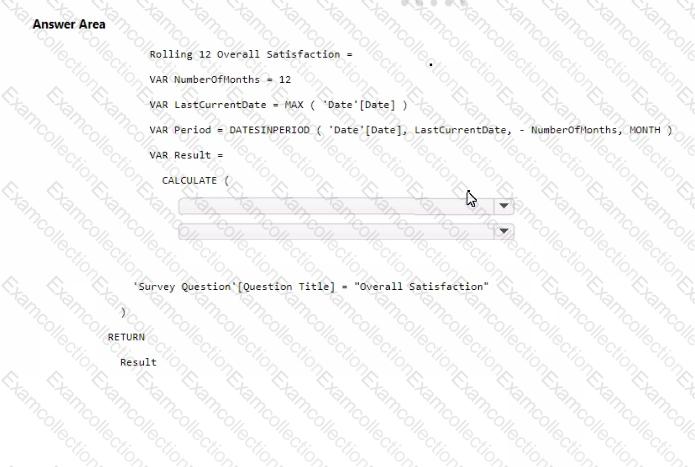
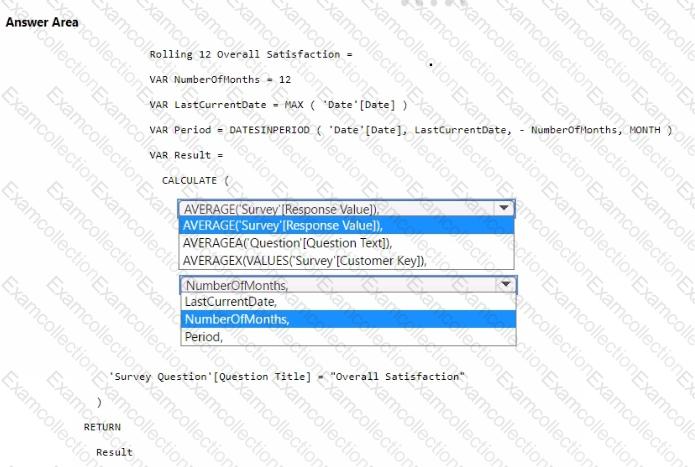
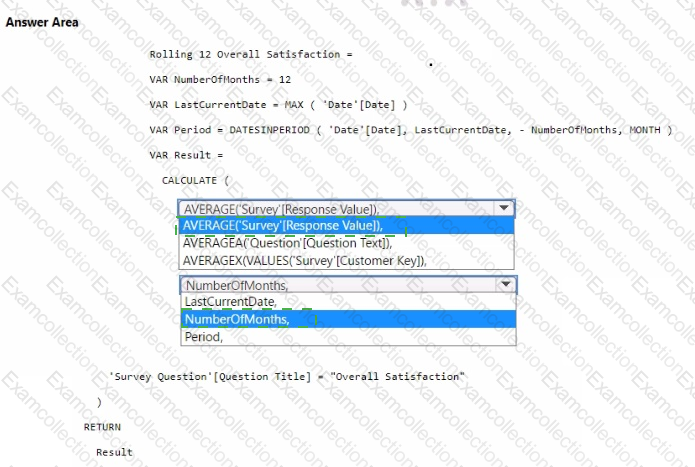
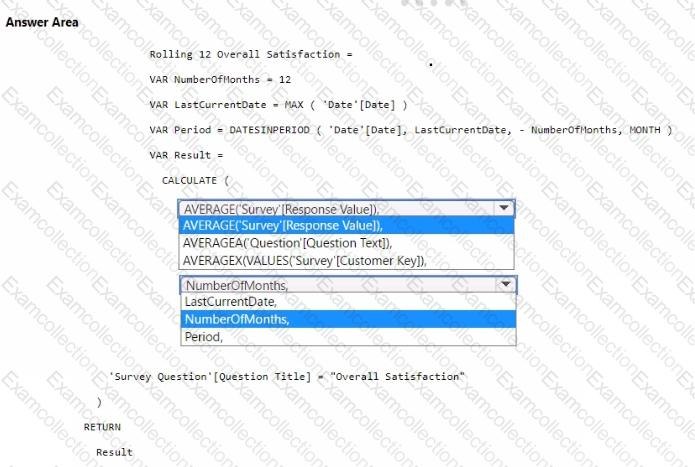
You need to create a DAX measure to calculate the average overall satisfaction score.
How should you complete the DAX code? To answer, select the appropriate options in the answer area.
NOTE: Each correct selection is worth one point.
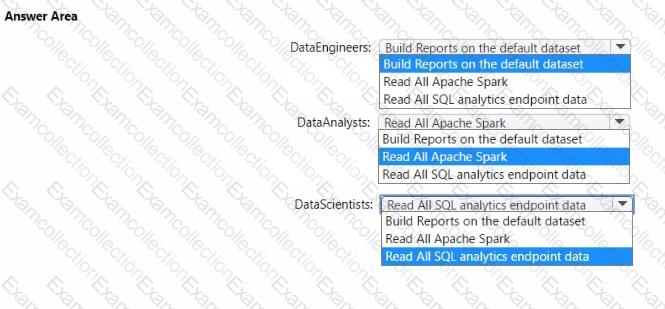
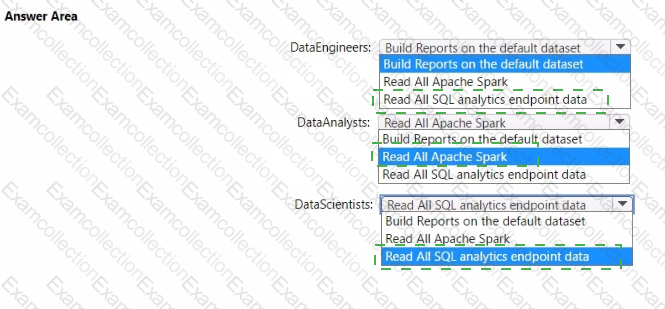
You to need assign permissions for the data store in the AnalyticsPOC workspace. The solution must meet the security requirements.
Which additional permissions should you assign when you share the data store? To answer, select the appropriate options in the answer area.
NOTE: Each correct selection is worth one point.
Which type of data store should you recommend in the AnalyticsPOC workspace?
You need to implement the date dimension in the data store. The solution must meet the technical requirements.
What are two ways to achieve the goal? Each correct answer presents a complete solution.
NOTE: Each correct selection is worth one point.