

Microsoft DP-700 - Implementing Data Engineering Solutions Using Microsoft Fabric
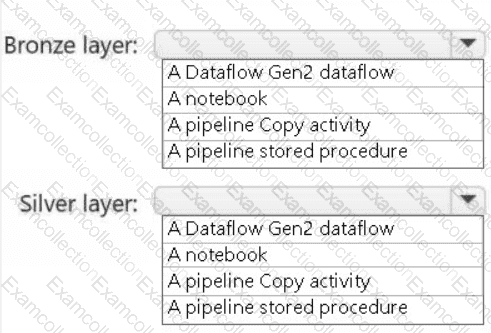
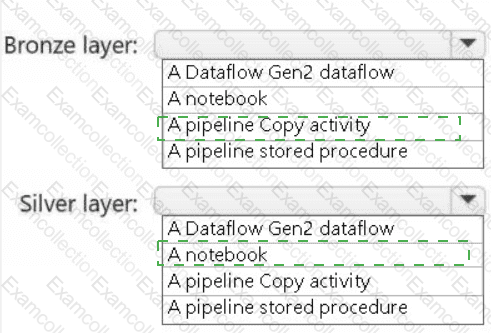
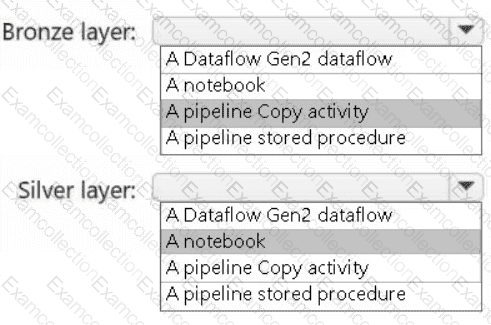
You have a Fabric workspace that contains a lakehouse named Lakehouse1.
In an external data source, you have data files that are 500Â GB each. A new file is added every day.
You need to ingest the data into Lakehouse1 without applying any transformations. The solution must meet the following requirements
Trigger the process when a new file is added.
Provide the highest throughput.
Which type of item should you use to ingest the data?
Note: This question is part of a series of questions that present the same scenario. Each question in the series contains a unique solution that might meet the stated goals. Some question sets might have more than one correct solution, while others might not have a correct solution.
After you answer a question in this section, you will NOT be able to return to it. As a result, these questions will not appear in the review screen.
You have a Fabric eventstream that loads data into a table named Bike_Location in a KQL database. The table contains the following columns:
BikepointID
Street
Neighbourhood
No_Bikes
No_Empty_Docks
Timestamp
You need to apply transformation and filter logic to prepare the data for consumption. The solution must return data for a neighbourhood named Sands End when No_Bikes is at least 15. The results must be ordered by No_Bikes in ascending order.
Solution: You use the following code segment:

Does this meet the goal?
Note: This question is part of a series of questions that present the same scenario. Each question in the series contains a unique solution that might meet the stated goals. Some question sets might have more than one correct solution, while others might not have a correct solution.
After you answer a question in this section, you will NOT be able to return to it. As a result, these questions will not appear in the review screen.
You have a KQL database that contains two tables named Stream and Reference. Stream contains streaming data in the following format.

Reference contains reference data in the following format.

Both tables contain millions of rows.
You have the following KQL queryset.

You need to reduce how long it takes to run the KQL queryset.
Solution: You change the join type to kind=outer.
Does this meet the goal?
You are implementing a medallion architecture in a Fabric lakehouse.
You plan to create a dimension table that will contain the following columns:
• ID
• CustomerCode
• CustomerName
• CustomerAddress
• CustomerLocation
• ValidFrom
• ValidTo
You need to ensure that the table supports the analysis of historical sales data by customer location at the time of each sale Which type of slowly changing dimension (SCD) should you use?
You have a Fabric warehouse named DW1 that contains a Type 2 slowly changing dimension (SCD) dimension table named DimCustomer. DimCustomer contains 100 columns and 20 million rows. The columns are of various data types, including int, varchar, date, and varbinary.
You need to identify incoming changes to the table and update the records when there is a change. The solution must minimize resource consumption.
What should you use to identify changes to attributes?
You have a Fabric workspace named Workspace1 that contains a lakehouse named Lakehouse1. Lakehouse1 contains the following tables:
Orders
Customer
Employee
The Employee table contains Personally Identifiable Information (PII).
A data engineer is building a workflow that requires writing data to the Customer table, however, the user does NOT have the elevated permissions required to view the contents of the Employee table.
You need to ensure that the data engineer can write data to the Customer table without reading data from the Employee table.
Which three actions should you perform? Each correct answer presents part of the solution.
NOTE: Each correct selection is worth one point.
You have a Fabric workspace named Workspace1 that contains the items shown in the following table.

For Model1, the Keep your Direct Lake data up to date option is disabled.
You need to configure the execution of the items to meet the following requirements:
Notebook1 must execute every weekday at 8:00Â AM.
Notebook2 must execute when a file is saved to an Azure Blob Storage container.
Model1 must refresh when Notebook1 has executed successfully.
How should you orchestrate each item? To answer, select the appropriate options in the answer area.
NOTE: Each correct selection is worth one point.
You have a Fabric workspace that contains a warehouse named Warehouse1. Warehouse! contains a table named Customer. Customer contains the following data.

You have an internal Microsoft Entra user named User1 that has an email address of user1@contoso.com.
You need to provide User1 with access to the Customer table. The solution must prevent User1 from accessing the CreditCard column.
How should you complete the statement? To answer, select the appropriate options in the answer area.
NOTE: Each correct selection is worth one point.
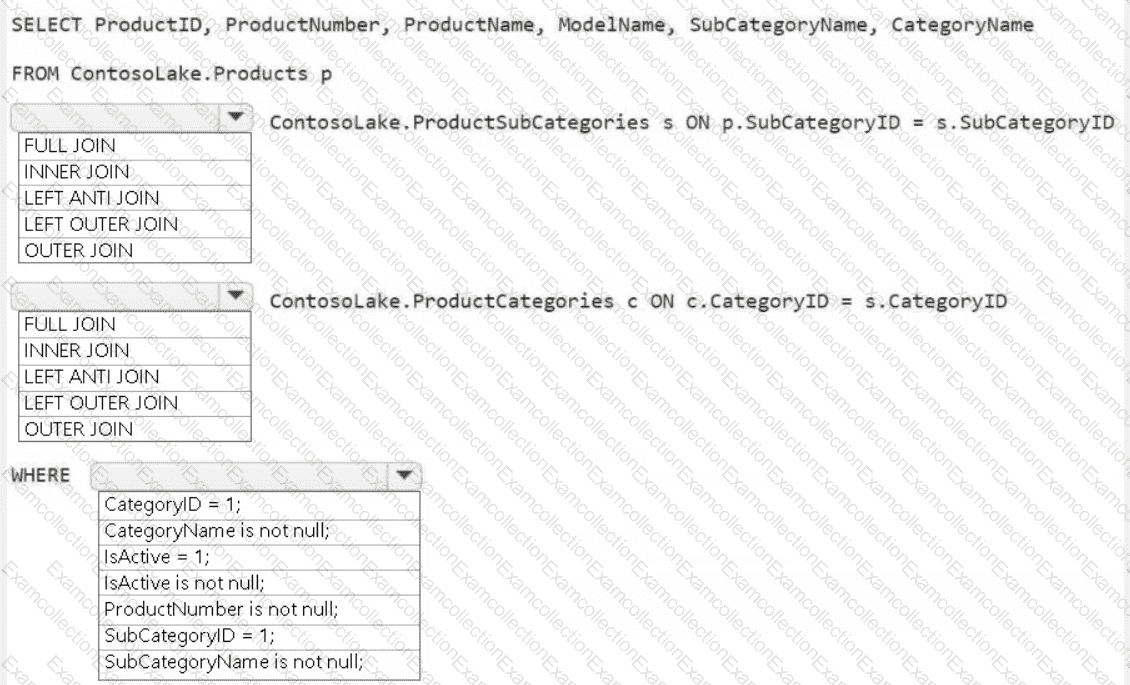
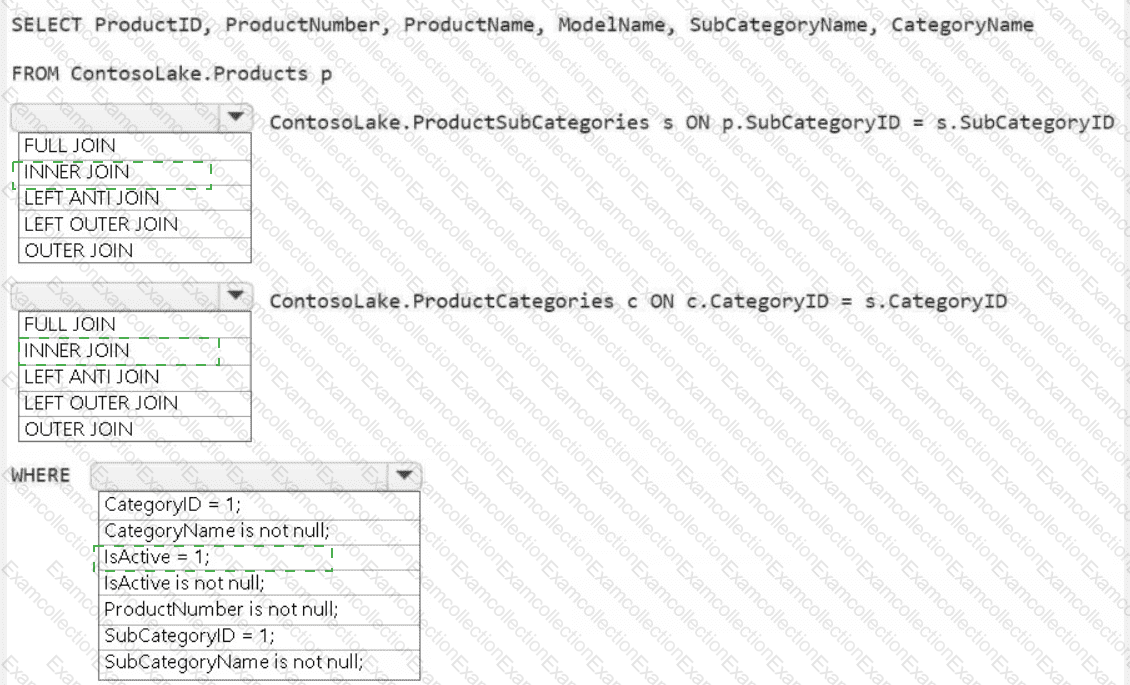
You have a table in a Fabric lakehouse that contains the following data.

You have a notebook that contains the following code segment.

For each of the following statements, select Yes if the statement is true. Otherwise, select No.
NOTE: Each correct selection is worth one point.

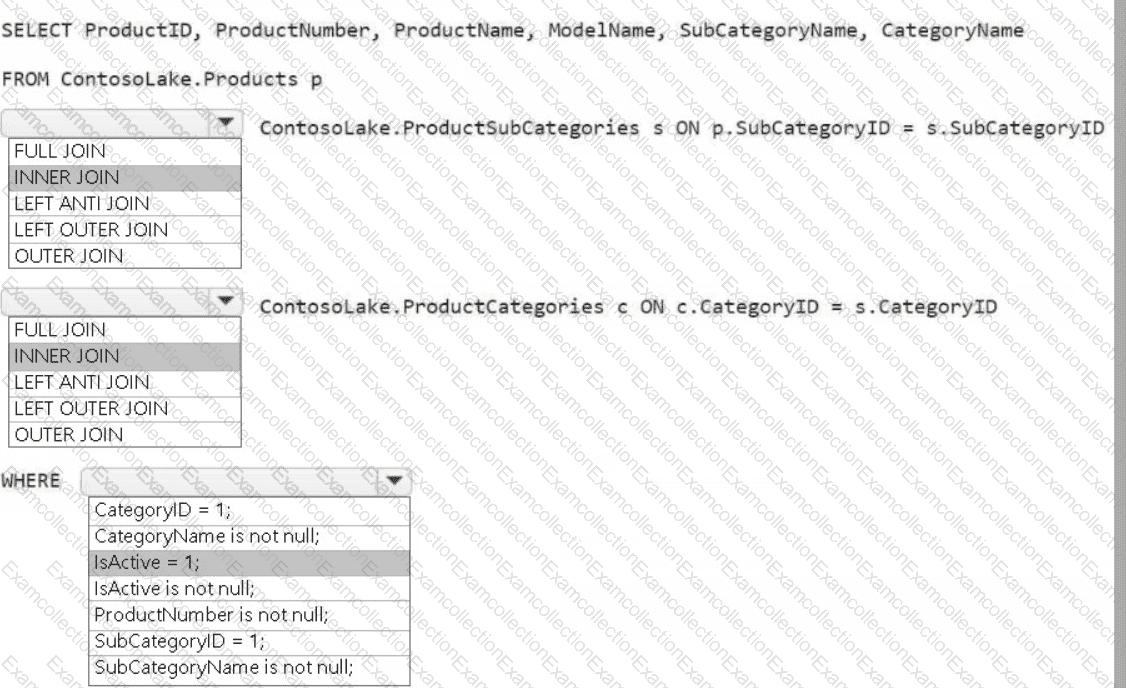
You have a Fabric warehouse named DW1 that contains four staging tables named ProductCategory, ProductSubcategory, Product, and SalesOrder. ProductCategory, ProductSubcategory, and Product are used often in analytical queries.
You need to implement a star schema for DW1. The solution must minimize development effort.
Which design approach should you use? To answer, select the appropriate options in the answer area.
NOTE: Each correct selection is worth one point.