


Fortinet FCSS_LED_AR-7.6 - Fortinet NSE 6 - LAN Edge 7.6 Architect
Refer to the exhibits.
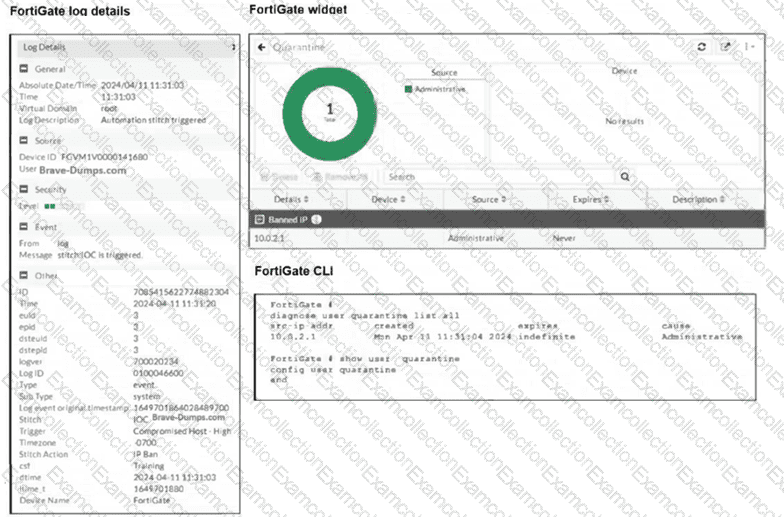
The exhibits show the FortiGate logs, widget, and CLI. Security Fabric quarantine automation is being tested using a device with the IP address 10.0.2.1, which is connected to a managed FortiSwitch. Shortly after attempting to access a malicious website, the device loses access to the internet and other VLANs within the network. However, it can still communicate with other devices within the same VLAN. Which configuration change is required to fix the issue?
Which statement about generating a certificate signing request (CSR) for a CER certificate is true?
A conference center wireless network provides guest access through a captive portal, allowing unregistered users to self-register and connect to the network. The IT team has been tasked with updating the existing configuration to enforce captive portal authentication over a secure HTTPS connection. Which two steps should the administrator take to implement this change? (Choose two.)
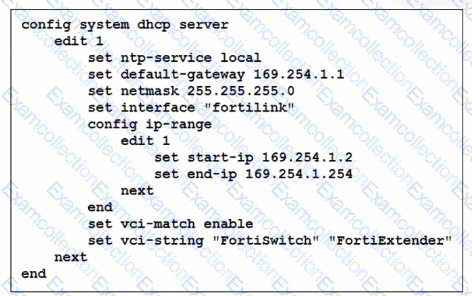
You ' ve configured the FortiLink interface, and the DHCP server is enabled by default. The resulting DHCP server settings are shown in the exhibit. What is the role of the vci-string setting in this configuration?
