


Netapp NS0-194 - NetApp Certified Support Engineer (NCSE)
When using NetApp Volume Encryption (NVE) which type of server is needed to keep encryption keys separate from encrypted data?
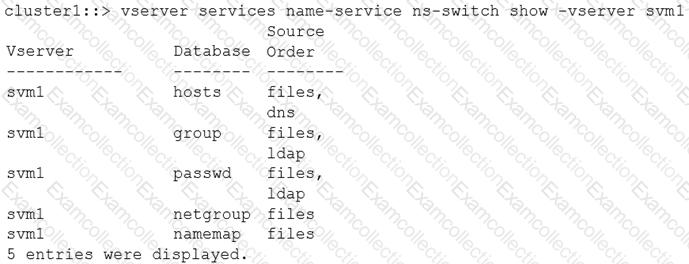
Referring to the exhibit, the UNIX user "prof1" will be looked up in which source first?
Which three techniques are used in ONTAP to improve storage efficiencies? (Choose three.)
Which NetApp technology enables a volume to span across one or more aggregates and one or more NetApp nodes?
How many data-serving SVMs are supported with Cloud Volumes ONTAP that is running ONTAP 9.5?
Several clients are accessing an ONTAP SnapMirror DP destination volume. Some clients frequently access the newest SnapMirror volume data. Accessing this data is much slower when compared to clients that directly access data on the source. You use the wafl scan status command against the destination.
What is a symptom of the problem in this scenario?
You want to update your storage system and are concerned about the compatibility of the SAN components and the host environment.
In this scenario, which two actions should you take to verify compatibility? (Choose two.)
You are working on a fabric MetroCluster. After a site failure, the plex starts to resync automatically to the aggregate mirror of Aggr1. The plex now shows a status of resyncing. During this process, you experience a slow resync of the SyncMirror plex.
In this scenario, how do you solve the problem?