


Fortinet NSE6_OTS_AR-7.6 - Fortinet NSE 6 - OT Security 7.6 Architect
Refer to the exhibit.
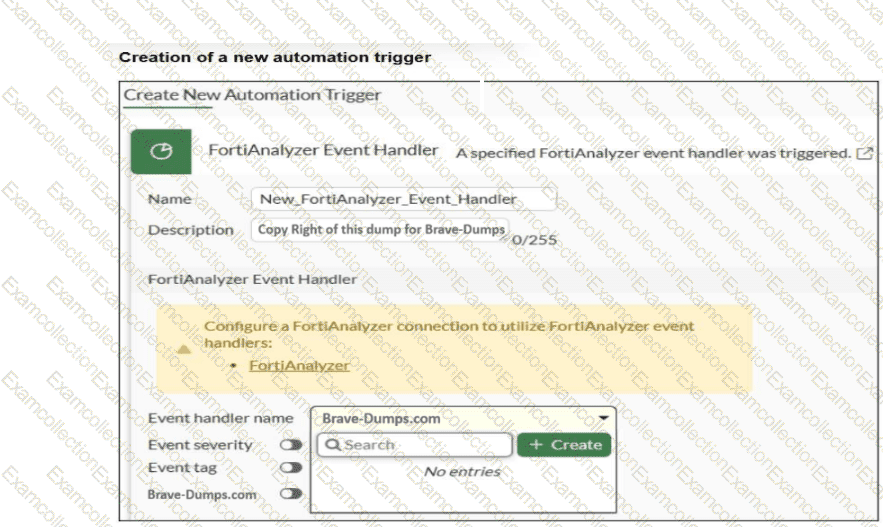
An automation trigger creation wizard is shown. You want to automate some tasks in your OT network. In a FortiGate device, you create a new automation trigger based on a FortiAnalyzer event handler. When you want to configure the Event handler name field, the event handler created in FortiAnalyzer is not shown. What are two reasons for this? (Choose two answers)
Refer to the exhibit.
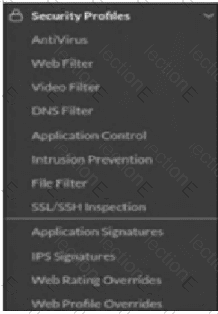
The OT devices behind the ruggedized FortiGate have vulnerabilities and you want to apply a virtual patching profile in the firewall policy. Why is Virtual Patching not available in the Security Profiles section? (Choose one answer)
Refer to the exhibits.
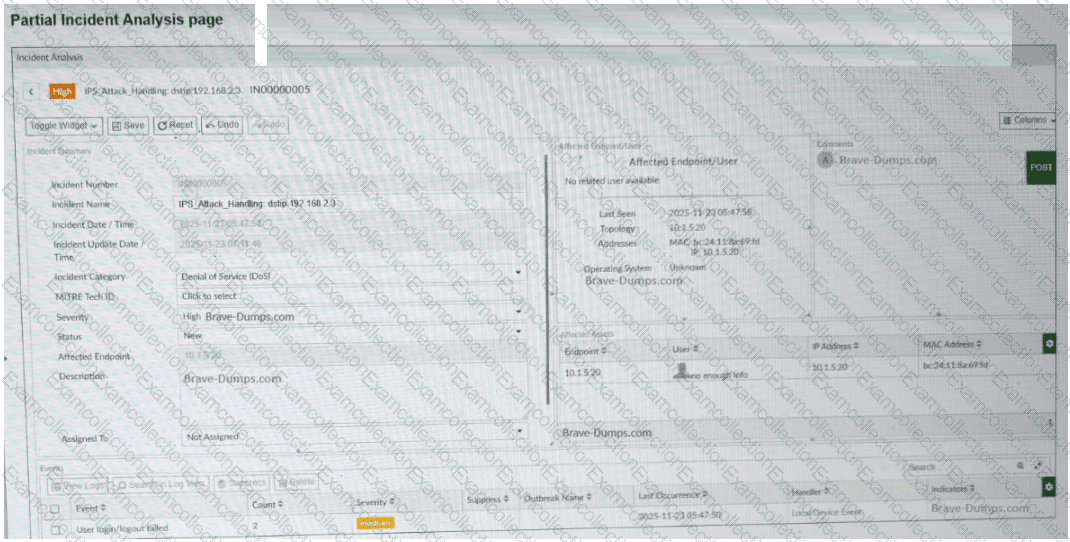
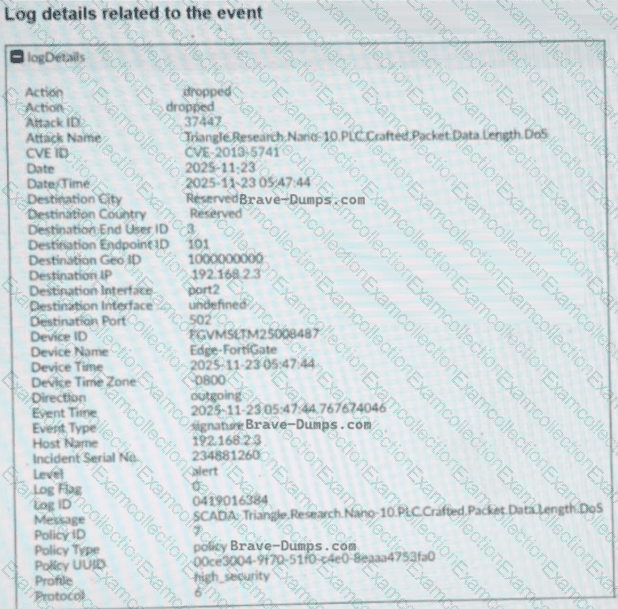
A partial Incident Analysis page and the log details related to the event are shown. An attack is reported on your OT network. You analyze the corresponding incident. Based on the information provided on the Incident Analysis page and the log details, which two statements are correct? (Choose two answers)
Refer to the exhibit.
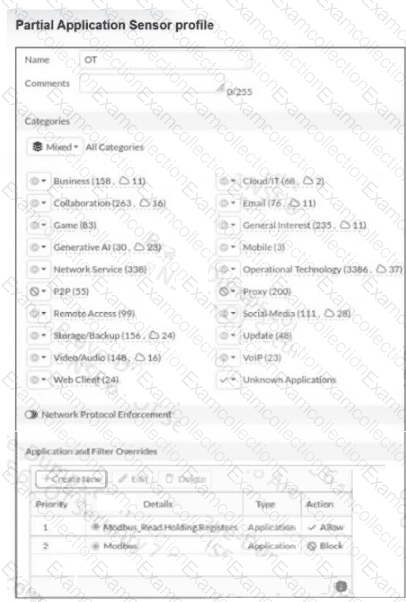
A partial Application Sensor profile is shown. When you apply this profile in firewall policy, which two statements are correct? (Choose two answers)
Refer to the exhibit.
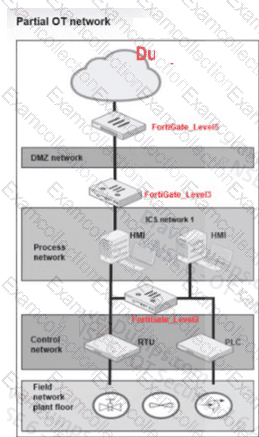
A partial OT network is shown. In this OT network, you must add additional security measures to detect OT protocols and, therefore, increase the traffic visibility. Which security sensor must you implement to detect the OT protocols in this network? (Choose one answer)
You would like to customize your current FortiAnalyzer report to provide a better risk assessment of your OT network. Which two options can you use to enhance your report? (Choose two answers)
What is the next step if FortiGate cannot detect a device locally? (Choose one answer)
You want to improve the security of your OT network and therefore deploy a FortiGate device with the OT signatures database. Which two statements about this database are true? (Choose two answers)
Refer to the exhibit.
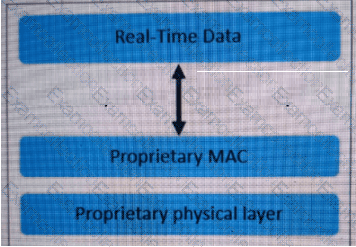
An industrial Ethernet protocol skipping layers 3 to 6 is shown. Which industrial Ethernet protocol is it? (Choose one answer)
Refer to the exhibit.
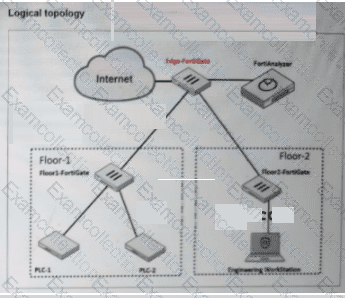
A partial OT network is shown. You want to configure an automated alert sent by FortiAnalyzer when an attack occurs on a FortiGate device. Which two configurations must you implement? (Choose two answers)