

Month End Sale Special Limited Time 70% Discount Offer - Ends in 0d 00h 00m 00s - Coupon code: xmas50

Fortinet NSE6_SDW_AD-7.6 - Fortinet NSE 6 - SD-WAN 7.6 Enterprise Administrator

Page: 1 / 3
Total 95 questions

(Refer to the exhibit. The administrator configured two SD-WAN rules to load balance the traffic.
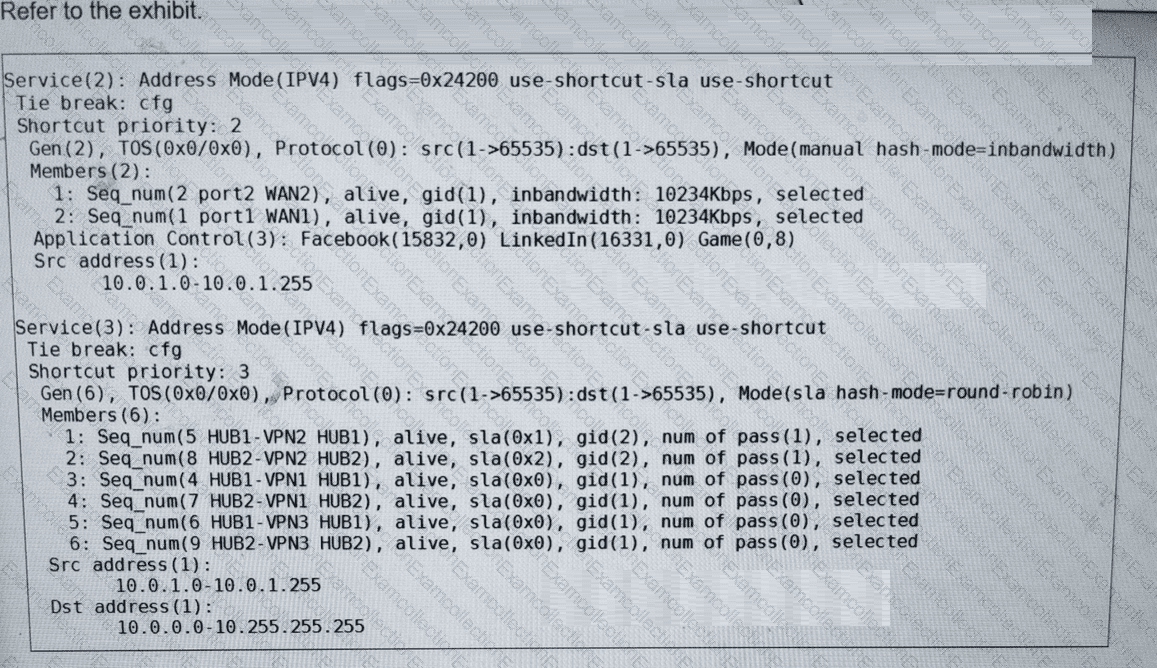
Which interfaces does FortiGate use to steer the traffic from 10.0.1.124 to 10.0.0.254? Choose one answer.)

A.

HUB2-VPN2

B.

HUB1-VPN2 or HUB2-VPN2

C.

port1 or port2

D.

Any interface in the HUB1 or HUB2 zones

You manage an SD-WAN topology. You will soon deploy 50 new branches.

Which three tasks can you do in advance to simplify this deployment? (Choose three.)

A.

Update the DHCP server configuration.

B.

Create model devices.

C.

Create a ZTP template.

D.

Define metadata variables value for each device.

E.

Create policy blueprint.

Which three characteristics apply to provisioning templates available on FortiManager? (Choose three.)

A.

A template group can include a system template and an SD-WAN template.

B.

Each template group can contain up to three IPsec tunnel templates.

C.

CLI templates are applied in order, from top to bottom

D.

A CLI template group can contain CLI templates of both types.

E.

A CLI template can be of type CLI script or Perl script.

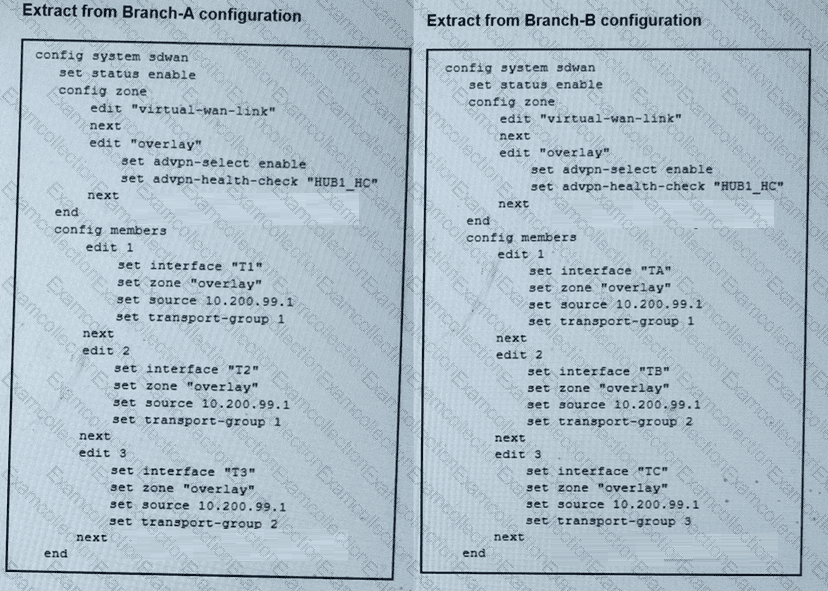
(Refer to the exhibits.

The SD-WAN zones and members configuration of two branch devices are shown. The two branch devices are part of the same hub-and-spoke topology and connect to the same hub. The devices are configured to allow Auto-Discovery VPN (ADVPN). The configuration on the hub allows the initial communication between the two spokes.

When traffic flows require it, between which interfaces can the devices establish shortcuts? Choose one answer.)

A.

Any interface in the overlay zones

B.

Interface connected to HUB only

C.

Between T3 on Branch-A and TC on Branch-B

D.

Between T2 on Branch-A and TA on Branch-B

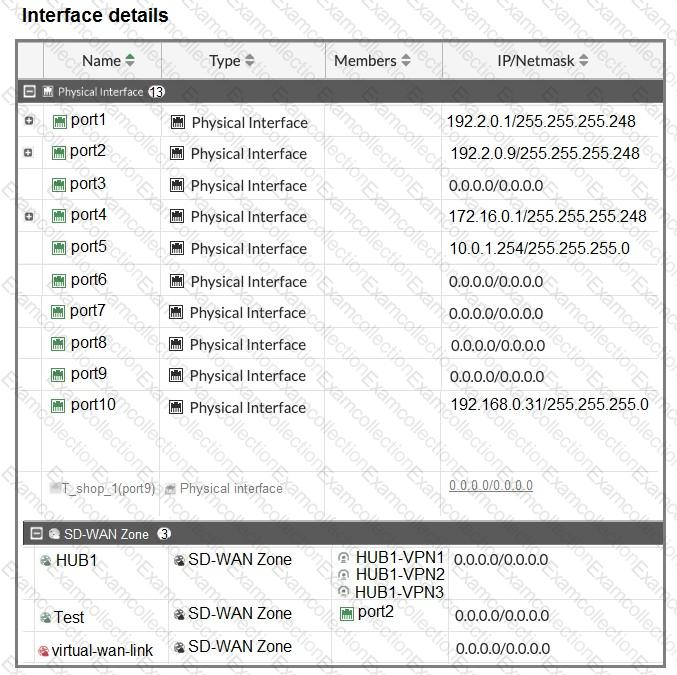
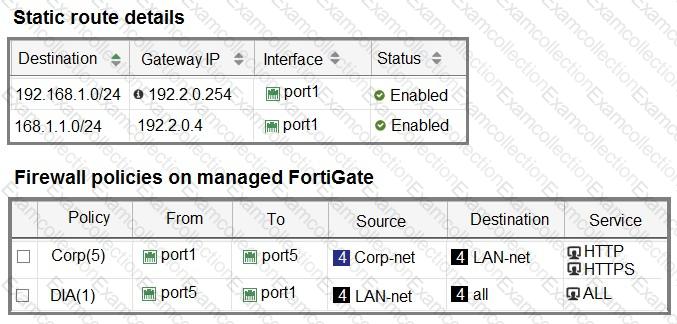
Refer to the exhibits.

The interface details, static route configuration, and firewall policies on the managed FortiGate device are shown.

You want to configure a new SD-WAN zone, named Underlay, that contains the interfaces port1 and port2.

What must be your first action?

A.

Define port1 as an SD-WAN member.

B.

Delete the static routes.

C.

Delete the SD-WAN Zone Test.

D.

Delete the firewall policies.

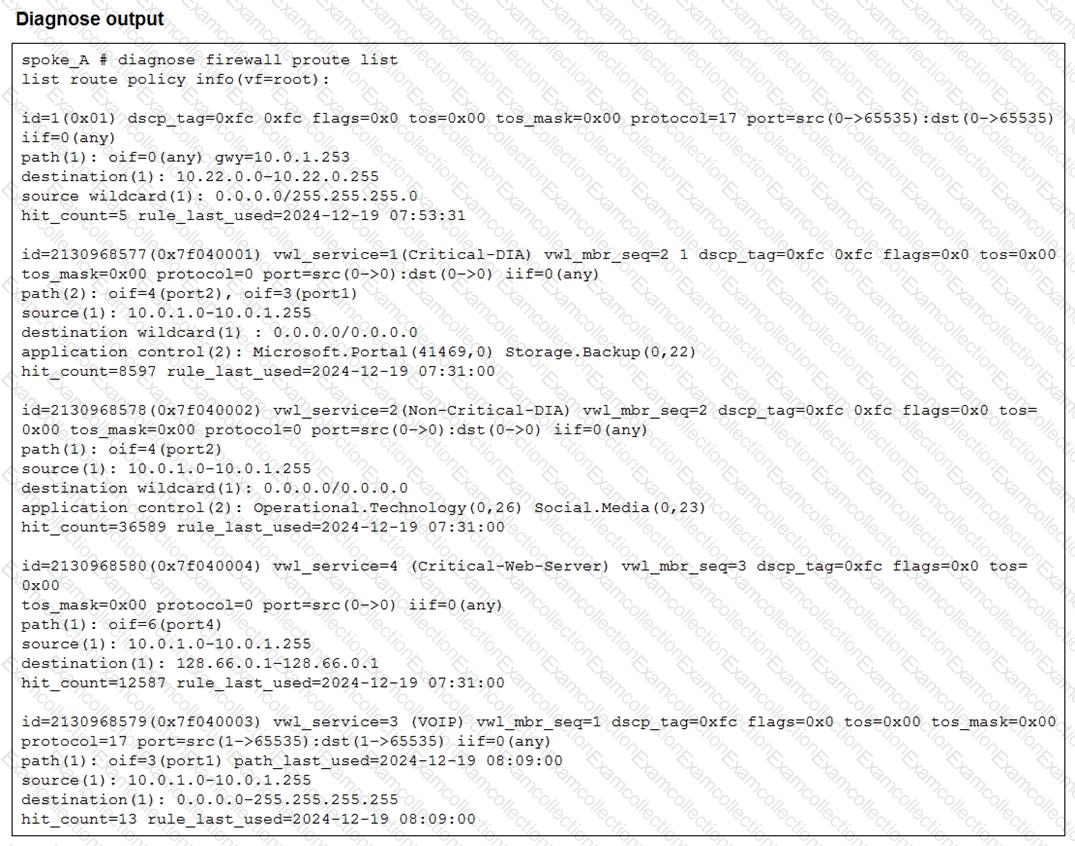
Refer to the exhibit.

Which two conclusions can you draw from the output shown? (Choose two.)

A.

One SD-WAN rule is defined with application categories as the destination.

B.

UDP traffic destined to the subnet 10.22.0.0/24 matches a manual SD-WAN rule.

C.

One SD-WAN rule allows traffic load balancing.

D.

UDP traffic destined to the subnet 10.22.0.0/24 matches a policy route.

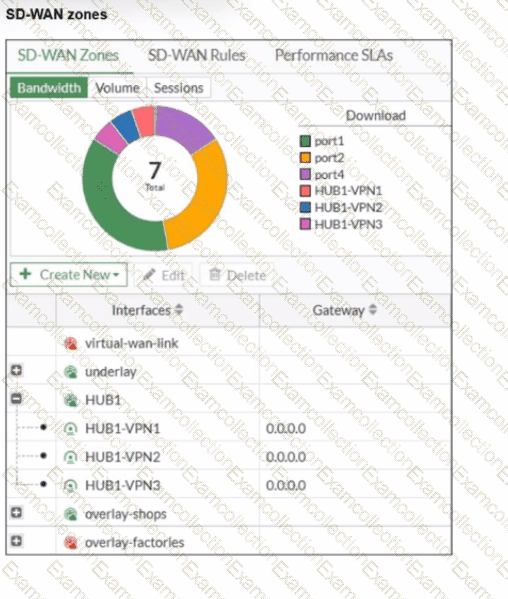
Exhibit.

Refer to the exhibit, which shows an SD-WAN zone configuration on the FortiGate GUI. What can you conclude about the zone and member configuration on this device?

A.

The underlay zone contains three members.

B.

You can delete the virtual-wan-link zones.

C.

The overlay-factories zone contains no member.

D.

You can move HUB1-VPN3 from the HUB1 zone to the overlay-shops zone.

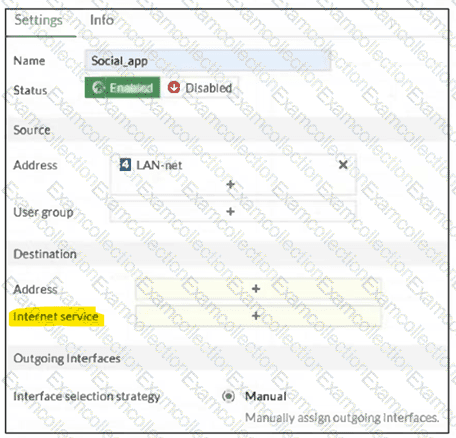
(Refer to the exhibit.

You configure SD-WAN on a standalone FortiGate device.

You want to create an SD-WAN rule that steers traffic related to Facebook and LinkedIn through the less costly internet link.

What must you do to set Facebook and LinkedIn applications as destinations from the GUI? Choose one answer.)

A.

Enable the visibility of the applications field as destinations of the SD-WAN rule.

B.

In the Internet service field, select Facebook and LinkedIn.

C.

You cannot configure applications as destinations of an SD-WAN rule on a standalone FortiGate device.

D.

Install a license to allow applications as destinations of SD-WAN rules.

As an MSSP administrator, you are asked to configure ADVPN on an existing SD-WAN topology. FortiManager manages the customer devices in a dedicated ADOM. The previous administrator used the SD-WAN overlay topology.

Which two statements apply to this scenario? (Choose two.)

A.

You can activate auto-discovery VPN in the SD-WAN overlay template only if it is a single hub topology.

B.

When auto-discovery VPN is enabled, FortiManager updates the IPsec and BGP templates in the hub.

C.

After you enable auto-discovery VPN in the overlay template, you must select between ADVPN 2.0 and ADVPN 1.0.

D.

You can activate auto-discovery VPN in the SD-WAN overlay template for any type of topology, including a primary-primary dual-hub topology.

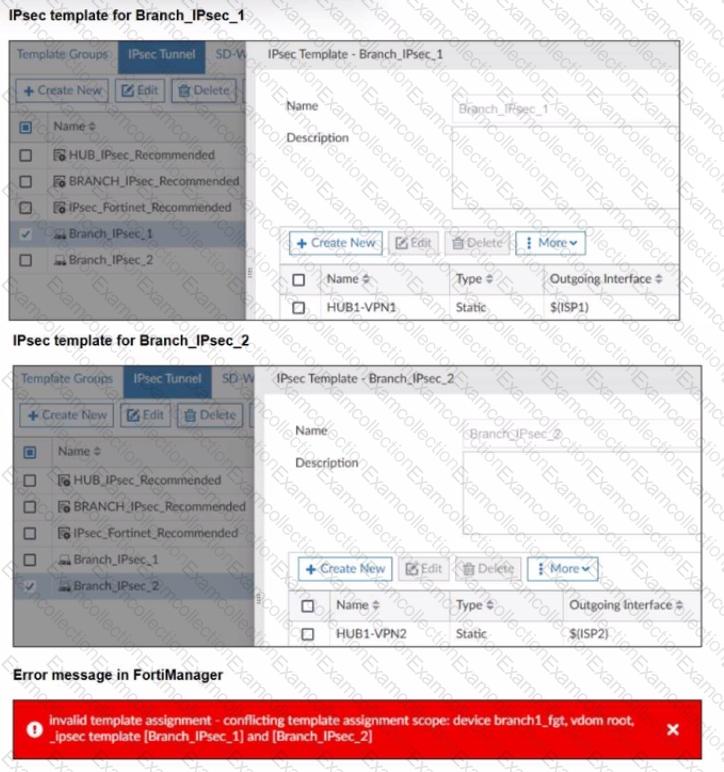
Refer to the exhibits.

The exhibits show two IPsec templates to define Branch IPsec 1 and Branch_IPsec_2. Each template defines a VPN tunnel. The error message that FortiManager displayed when the administrator tried to assign the second template to the FortiGate device is also shown.

Which statement best describes the cause of the issue?

A.

You can assign only one template with a tunnel type of static to each FortiGate device.

B.

You can assign only one IPsec template to each FortiGate device.

C.

You should review the branch1_fgt configuration for configured tunnels in the rootVDOM.

D.

You should use the same outgoing interface of both templates.