


Fortinet NSE7_SOC_AR-7.6 - Fortinet NSE 7 - Security Operations 7.6 Architect
You want to trigger an incident when multiple failed logins from the same host are followed by a successful login on that same host within 15 minutes. The rule must correlate all events by source IP address and user to ensure they belong to the same login sequence. Which three configurations achieve this goal? Choose three answers.
Refer to the exhibit.
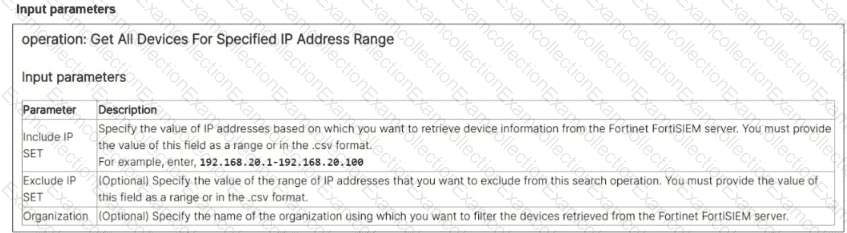
A list of FortiSIEM connector actions is shown. You want to create a playbook on FortiSOAR that allows you to accomplish the following:
Manually input a range of IP addresses.
Use the connector action in the exhibit to retrieve a list of devices from the FortiSIEM configuration management database (CMDB) within that IP address range.
For each returned result, create an asset record based on the IP address of the device.
Which combination and order of step operations fulfills the requirements with the fewest required playbook steps?
A large enterprise FortiSIEM deployment is experiencing delays in log correlation and analytics. Which architectural adjustment is most appropriate? Choose one answer.
Which of the following are critical when analyzing and managing events and incidents in a SOC? (Choose two answers)
Review the incident report:
An attacker identified employee names, roles, and email patterns from public press releases, which were then used to craft tailored emails.
The emails were directed to recipients to review an attached agenda using a link hosted off the corporate domain.
Which two MITRE ATT & CK tactics best fit this report? (Choose two answers)
A FortiSOAR playbook includes a Wait step that is configured to pause execution after initiating a reputation lookup on an indicator. Which two configurations of the Wait step are valid? Choose two answers.
Refer to the exhibits.
The FortiMail Sender Blocklist playbook is configured to take manual input and add those entries to the FortiMail abc. com domain-level block list. The playbook is configured to use a FortiMail connector and the ADD_SENDER_TO_BLOCKLIST action.
Why is the FortiMail Sender Blocklist playbook execution failing7
Match the FortiSOAR architecture element to its description.
Select each FortiSOAR architecture element in the left column and drag and drop it into the blank space next to its corresponding description in the right column. After matching an element, you can move it again if you want to change your answer. You must match four elements with their descriptions in the work area.
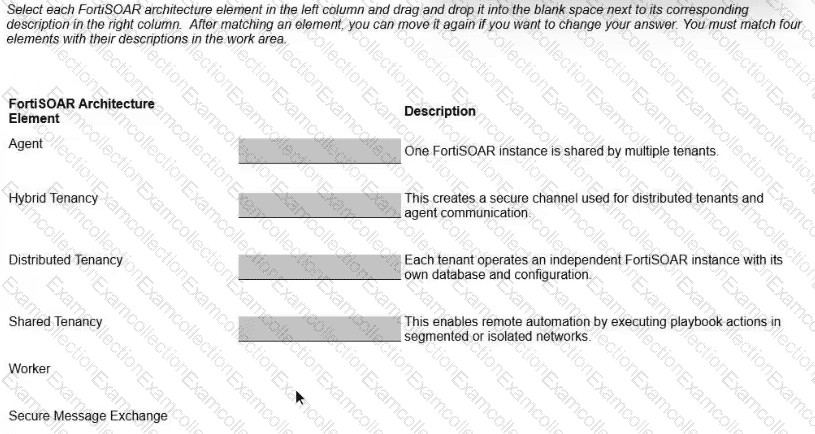
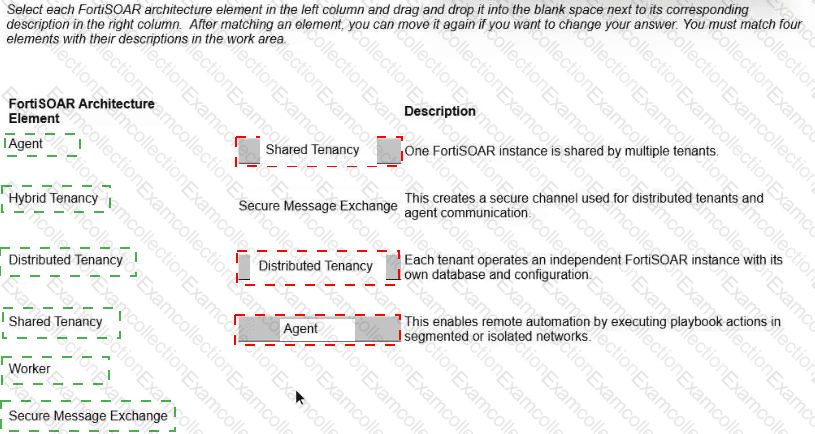
Refer to the exhibit.
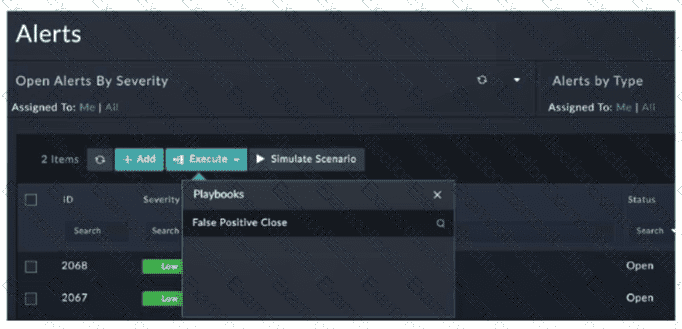
You configured a playbook named False Positive Close, and want to run it to verify if it works. However, when you click Execute and search for the playbook, you do not see it listed. Which two reasons could be the cause of the problem? (Choose two answers)
A very long FortiSOAR playbook failed at step 30 because of an intermittent networking issue, which has now been resolved. You want to finish executing the playbook without repeating earlier steps or losing prior context. Which action should you take? Choose one answer.