Microsoft SC-500 - Microsoft Certified: Cloud and AI Security Engineer Associate
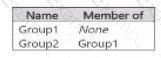
You have an Azure subscription that is linked to a Microsoft Entra tenant the tenant contains the groups shown in the following table.
The tenant contains the users shown in the following table.
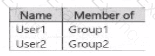
The subscription contains the Azure SOL servers shown in the following table.
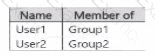
The servers are configured for Microsoft Entra-only authentication.
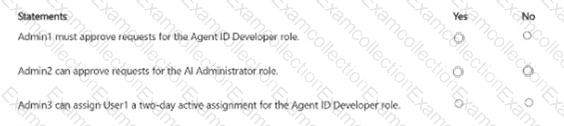
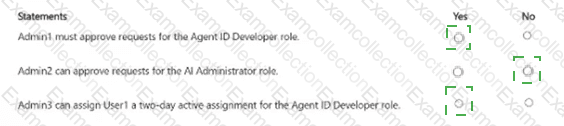
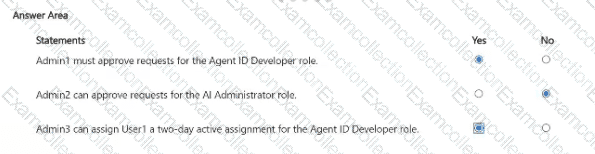
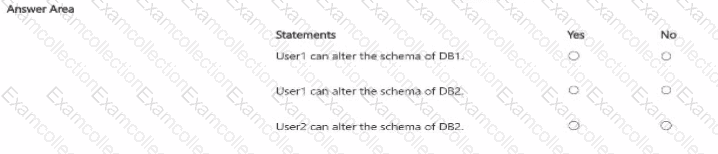
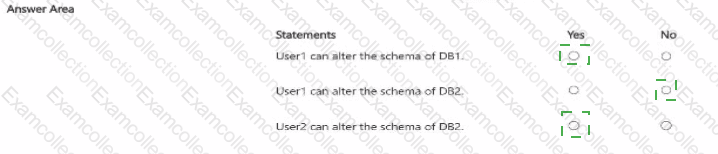
For each of the following statements, select Yes if the statement is true. Otherwise, select No.
NOTE: Each correct selection is worth one point.
You have a Microsoft 365 subscription.
You use Microsoft Entra Agent ID to manage an agent identity.
You manage AI agents from the Microsoft 365 admin center.
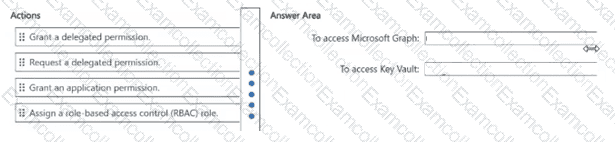
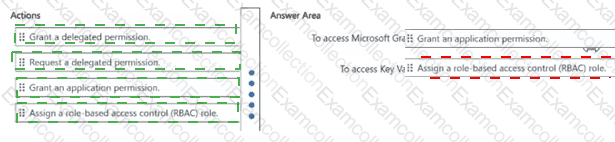
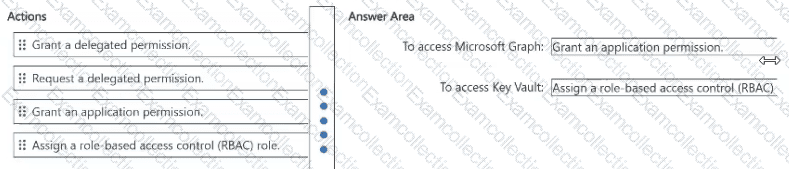
An autonomous agent named Agent1 runs without a signed-in user. The agent must access Microsoft Graph and read secrets from a single Azure key vault.
You need to grant Agent 1 access to Microsoft Graph and Key Vault without requiring user interaction or consent at runtime.
What should you do for the agent identity? To answer, drag the appropriate actions to the correct services. Each action may be used once, more than once, or not at all. You may need to drag the split bar between panes or scroll to view content.
NOTE: Each correct selection is worth one point.
You have a Microsoft Entra tenant that contains a group named Group1.
You plan to target Group1 to use the Microsoft Authenticator authentication method.
You need to ensure that the members in Group1 can use the Authenticator app as their primary authentication method.
What should you do?
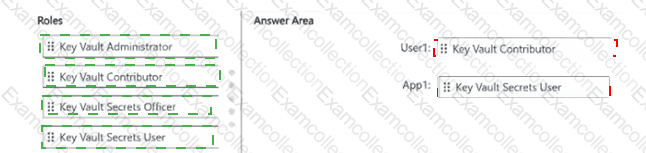
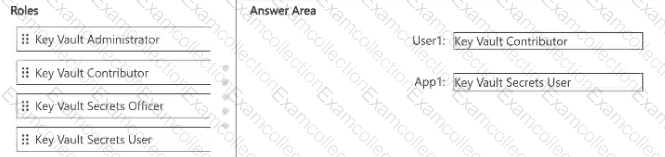
You have an Azure key vault named KV1 that uses role-based access control (RBAC) for data plane authorization.
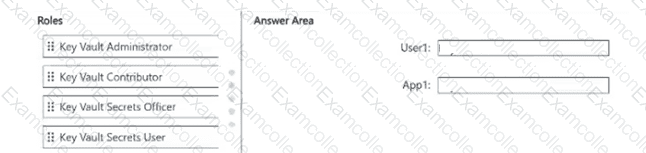
You have a user named User1 and an Azure App Service web app named App1 that has a system-assigned managed identity.
You need to configure authorization to meet the following requirements:
•App1 must be able to retrieve secrets from KV1.
•User1 must manage the KV1 settings without accessing secret values.
The solution must follow the principle of least privilege.
Which role should you assign to each identity for KV1? To answer, drag the appropriate roles to the correct identities. Each role may be used once, more than once, or not at all. You may need to drag the split bar between panes or scroll to view content.
NOTE: Each correct selection is worth one point.
Note: This section contains one or more sets of questions with the same scenario and problem. Each question presents a unique solution to the problem. You must determine whether the solution meets the stated goals. More than one solution in the set might solve the problem. It is also possible that none of the solutions in the set solve the problem.
After you answer a question in this section, you will NOT be able to return. As a result, these questions do not appear on the Review Screen.
You have a Microsoft Sentinel workspace
You have a multi-tier Security Operations Center (SOC) team.
You need to ensure that all new security incidents are assigned immediately to the Tier 1 analysts group and flagged for triage.
Solution: You create an automation rule.
Does this meet the goal?
You need to implement the planned change for storage2 The solution must meet the technical requirements for storage encryption.
What should you do?
You need to implement the planned change for the AKS1 integration.
What should you configure for AKS1?
Note: This section contains one or more sets of questions with the same scenario and problem. Each question presents a unique solution to the problem. You must determine whether the solution meets the stated goals. More than one solution in the set might solve the problem. It is also possible that none of the solutions in the set solve the problem.
After you answer a question in this section, you will NOT be able to return. As a result, these questions do not appear on the Review Screen.
You have a Microsoft Sentinel workspace
You have a multi-tier Security Operations Center (SOC) team.
You need to ensure that all new security incidents are assigned immediately to the Tier 1 analysts group and flagged for triage.
Solution: You create a playbook
Does this meet the goal?
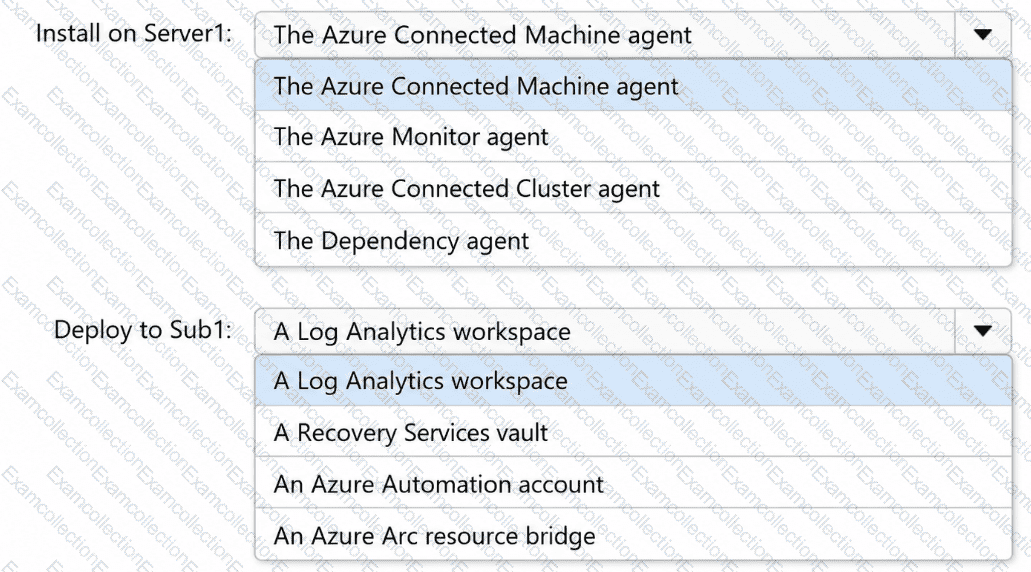
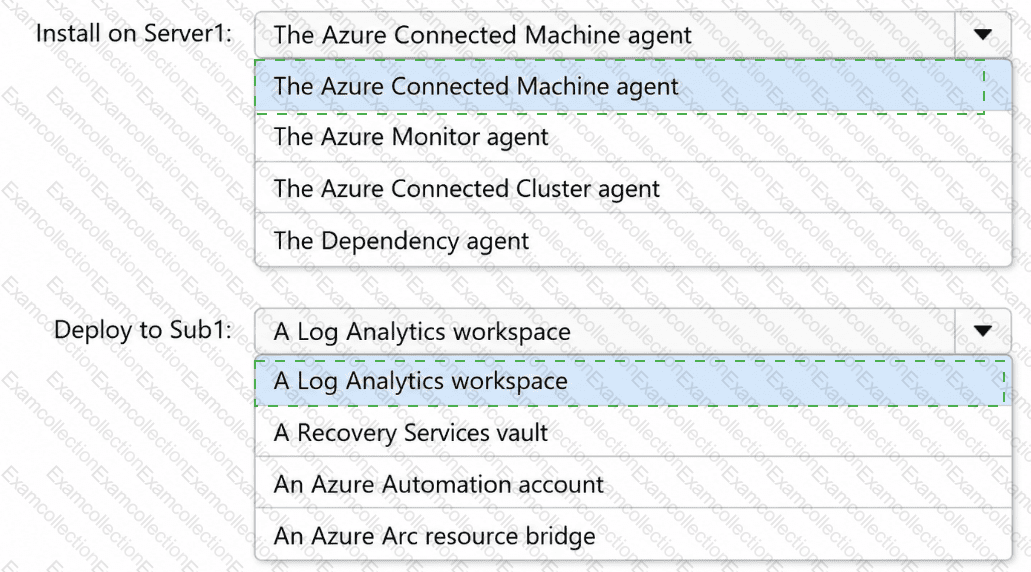
You need to configure Server1 to meet the technical requirements.
What should you do? To answer, select the appropriate options in the answer area.
NOTE: Each correct selection is worth one point.

For each of the following statements, select Yes if the statement is true Otherwise, select No.